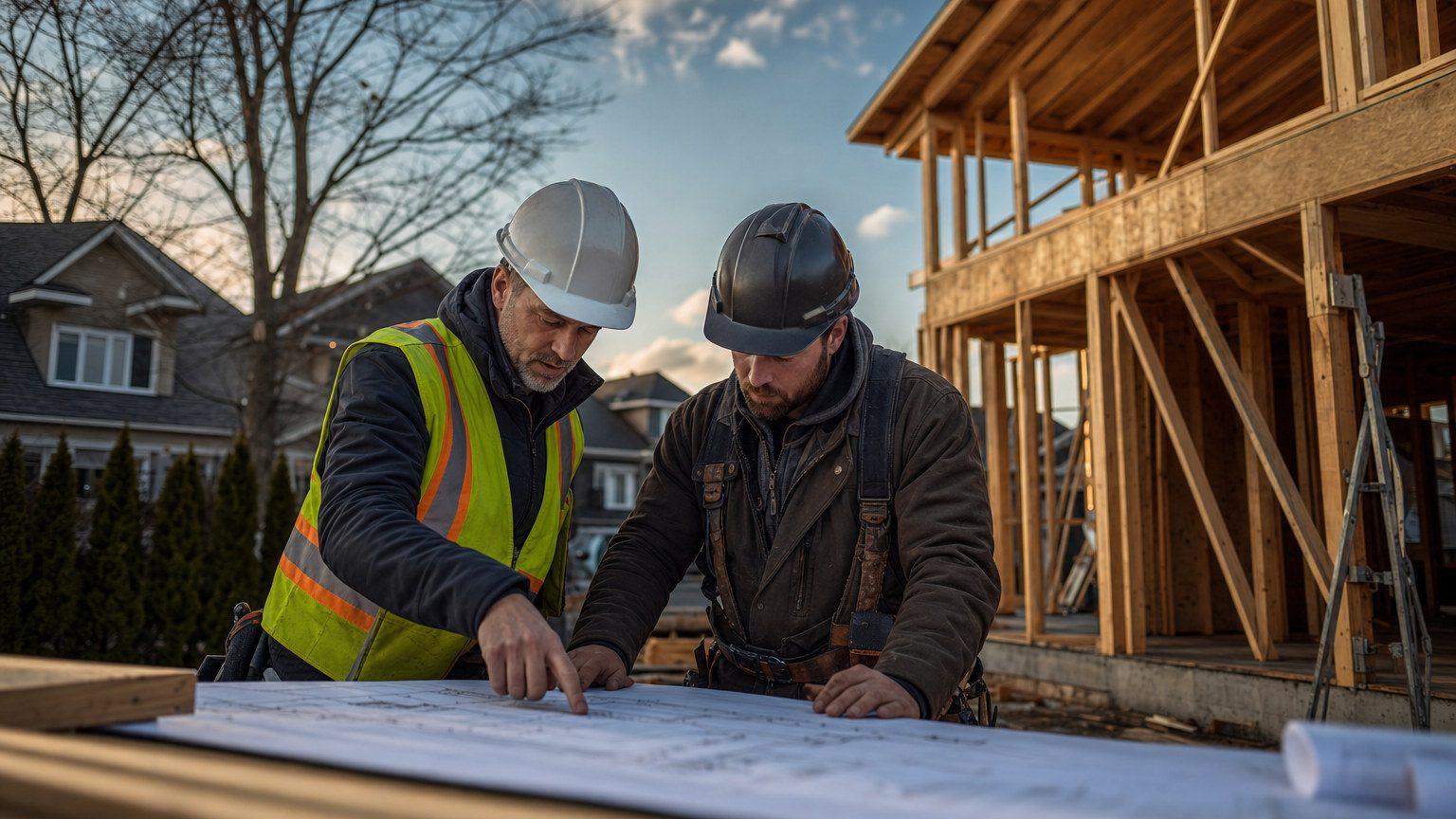
Yes. Construction arbitrage is legal in Ontario. You hold the contract, your licensed subs do the work, you keep the spread. Ontario has no provincial general contractor licence for renovation or commercial work - which is a bigger deal than most people realise. The compliance burden here falls on WSIB, your trade subs' own licences, and the Construction Act's holdback rules. If you are building new homes, there is one more layer: the HCRA licence.
I have run this model across the UK and I work with operators in Canada. Ontario's picture is clean on the GC side and demanding on the trade-licence and WSIB side. Here is what actually matters before you take a contract.
Is construction arbitrage legal in Ontario - what the law says
Construction arbitrage means winning the work, subcontracting the physical labour to specialist trades, and keeping the margin between the two prices. Some people call it contractor arbitrage or construction dropservicing - same thing. The legal position globally is that the structure is standard contracting, completely legal, and the real question is compliance.
In Ontario, there is no law that says a main contractor cannot subcontract all physical work. That is how every commercial build, most residential renovations, and the bulk of multi-unit residential projects are delivered in this province. The main contractor holds the prime contract, coordinates, manages risk, and subs everything to specialist trades. That is the model, and Ontario law is built around it.
The Canada country-level overview covers the federal picture - no national GC licence, T5018 reporting, the 10% holdback that runs through every province. This post goes one level deeper into Ontario specifically.
No provincial GC licence for renovation or commercial work
This is the most important point for anyone researching Ontario. There is no provincial general contractor licence that you need to hold to operate as a main contractor on renovation or commercial projects.
No provincial board licences general contractors doing renovation or commercial work. No exam. No registration with a province-wide body. You set up your business, register with the CRA, get your WSIB account in order, and win contracts. The compliance layer for GC work comes from municipal building permits and the sub licences I cover below - not from a provincial GC licence.
This is different from states like California, where the CSLB licences all contractors, or Quebec, where the RBQ licence is mandatory for anyone having construction work done. Ontario does not have that layer for renovations and commercial work.
HCRA licence - new home builders only
The one provincial construction licence in Ontario is the HCRA (Home Construction Regulatory Authority) licence. It applies only to businesses that build or sell new homes.
Under the New Home Construction Licensing Act, 2017, it is illegal to build or sell a new home in Ontario without a valid HCRA licence. The HCRA also administers Tarion warranty enrolment - every new home gets enrolled before construction starts, and there is a per-unit fee on top of the licence fee.
If you are winning new residential build contracts and subcontracting all the physical work - framing, electrical, plumbing, drywalling - you are building a new home and you need the HCRA licence. Starting February 2026, your HCRA licence number must appear on building permit applications for new home construction.
If you are doing renovations, commercial builds, or any project that is not a new home, the HCRA does not touch you.
For current fees and the application process, check hcraontario.ca. Fees were under review in 2026, so verify the current amounts before budgeting.
Electrical - ESA contractor licence required
Every electrical contractor doing work for hire in Ontario needs a licence from the ESA (Electrical Safety Authority) under O. Reg. 570/05. No exemption for subcontractors.
The electrical sub you use must hold a valid ESA electrical contractor licence. That licence requires the company to name at least one licensed Master Electrician as the responsible party for the work. The Master Electrician holds a Certificate of Qualification (309A for construction and maintenance or 442A for industrial), issued by Skilled Trades Ontario.
As the main contractor, you are not off the hook if an unlicensed sub does electrical work on your site. Failed inspections, stop-work orders, and potential liability for defects all land on the job. Before every project: verify the electrical sub's ESA licence at esasafe.com. Keep a record.
Gas and mechanical - TSSA certification
Gas-fired HVAC work - boilers, furnaces, water heaters, gas lines - requires a licensed Gas Technician under the TSSA (Technical Standards and Safety Authority). The TSSA issues Gas Technician credentials at different scope levels (G1, G2). Your HVAC sub doing any gas work must hold the right TSSA credential for the work being done.
The TSSA maintains a public registry. Verify your HVAC sub's authorisation at tssa.org before they touch a gas line.
For refrigerant work - central AC, heat pumps - the trade is 313A Refrigeration and Air Conditioning Systems Mechanic, certified through Skilled Trades Ontario. Your AC sub should hold that credential.
If the HVAC sub is doing electrical work beyond the scope of their mechanical qualifications, they also need an ESA contractor licence for that portion. This is worth confirming on the quote before work starts.
WSIB - mandatory for construction, including you
Ontario's construction industry is Schedule 1 under the Workplace Safety and Insurance Act. That means WSIB coverage is mandatory - for employers and, since 2013, for independent operators in construction.
What "independent operator" means here: a sole proprietor or partner who performs or manages construction work, has no employees, and works as a contractor or subcontractor. Even if you are solo and sub everything out, if you are actively managing construction work for hire in Ontario, you need to register with WSIB for your own coverage.
As an employer with workers, you must register with WSIB within 10 days of your first hire. WSIB's Maximum Insurable Earnings for 2026 is $121,700. Your rate depends on your industry classification.
The critical rule for the arbitrage model: every subcontractor you use must also have their own active WSIB coverage. If a sub does not have coverage and gets injured on your site, WSIB can treat you as the deemed employer and hold you liable for the claim. Before every sub starts work, request a WSIB clearance certificate. WSIB issues these online and they confirm the sub's standing. Keep it on file.
Verify your subs' WSIB status at wsib.ca.
Ontario Construction Act - holdback and liens
Ontario's Construction Act governs payment, holdbacks and lien rights across the whole supply chain. If you are operating as a main contractor in Ontario, this Act binds you.
The core rule: you must retain 10% of every payment you make under a construction contract or subcontract. When your client pays you a progress draw, hold back 10%. When you pay your subs, hold back 10% from them too.
Effective January 1, 2026, Ontario added mandatory annual holdback release. Once holdback money is released to you by the client, you have 14 days to pass it down to your subcontractors. This is a material change from how holdback worked previously - release to the GC now triggers a 14-day clock to pay down the chain.
Your subs also have lien rights. A sub who is not paid can register a lien against the property. As the main contractor, you are sitting between the client and the supply chain on this - your payment terms, your contract with the client, and your contracts with subs all need to reflect the holdback and lien rules.
One practical step: include a "pay when paid" or "pay when certified" clause in your sub agreements that mirrors your payment terms with the client. This does not eliminate holdback obligations but it aligns timing.
HST and CRA reporting
Ontario's Harmonised Sales Tax is 13% - the 5% federal GST plus the 8% provincial component. Construction services are taxable at 13%.
Once your annual revenue exceeds $30,000 in any four consecutive calendar quarters, you must register for an HST number with the CRA. Once registered, you charge 13% HST on your invoices to clients. You claim input tax credits on the HST your subs and suppliers charge you.
For sub payments: once you are paying subcontractors more than $500 per job for construction services, the T5018 Statement of Contract Payments reporting obligation applies. You file T5018 slips with the CRA at year end naming each sub and the total paid. The Canada overview covers this in more detail.
Toronto and municipal layers
Toronto operates its own municipal licensing system for contractors. The City requires a Building Renovator licence for businesses that repair or renovate buildings. If you are taking jobs in Toronto, check the City of Toronto's licensing page for current requirements, fees, and insurance minimums.
Other Ontario municipalities may have their own requirements. Ottawa, Mississauga, Brampton, Hamilton - each has a building department and its own permit process. Building permits are required for most structural, electrical, plumbing, and HVAC work regardless of where in the province the job sits. As the main contractor, you are typically the one pulling the permit.
The compliance checklist for Ontario
Before you take your first contract in Ontario, work through this:
- Register your business with the Ontario Business Registry (ontario.ca/page/register-business-ontario)
- Register with WSIB within 10 days of your first hire, or as an independent operator if you are running this solo
- Register for HST with the CRA once you hit the $30,000 threshold
- If you are building or selling new homes, apply for your HCRA licence before bidding
- Verify every electrical sub's ESA contractor licence before they start
- Verify every gas and HVAC sub's TSSA Gas Technician credential before they touch a gas line
- Request a WSIB clearance certificate from every sub before work begins
- Apply the 10% holdback on every contract and subcontract, and release it within 14 days of receiving it
- File T5018 slips at year end for every sub you pay more than $500 to on a construction contract
- Pull the municipal building permit for every job that requires one
That is the whole structure. The model is legal. The compliance is manageable. The operators who get into trouble in Ontario are the ones who skip WSIB verification or use electrical subs without ESA licences.
If you want to understand the broader model before diving into the province-specific rules, listen to THE EDGE - it covers cash flow, payment terms, and how to protect yourself when a client is slow to pay, which is the other half of running this model well.
Last checked: 13 November 2026.
Frequently asked questions
Is construction arbitrage legal in Ontario?+
Yes. Construction arbitrage is legal in Ontario. Winning the prime contract, subcontracting the physical work to specialist trades, and keeping the spread is how general contracting already works in this province. There is no provincial law that prohibits subcontracting all physical work. The real requirements are compliance - WSIB coverage for you and your subs, the right trade licences on each sub, and an HCRA licence if you are building or selling new homes.
Do I need a GC licence to do construction arbitrage in Ontario?+
No provincial general contractor licence exists for renovation or commercial construction work in Ontario. The HCRA licence is the only provincial construction licence - and it only applies if you are building or selling new homes. For renovation work and commercial contracts, there is no provincial body that licences general contractors. Your compliance obligations come from WSIB registration, municipal building permits, and the trade licences your subs hold.
What is the HCRA and when do I need a licence?+
The HCRA (Home Construction Regulatory Authority) licences new home builders and vendors in Ontario under the New Home Construction Licensing Act, 2017. If your business builds or sells new homes, you need an HCRA licence before you take any contract. If you are doing renovation work or commercial projects, the HCRA does not apply to you. Building or selling a new home without a valid HCRA licence is a criminal offence under the Act.
Do my electrical subs need an ESA licence in Ontario?+
Yes. All electrical work for hire in Ontario requires an ESA (Electrical Safety Authority) contractor licence under O. Reg. 570/05. The electrical contractor must name a licensed Master Electrician as the responsible party. As the main contractor, you should verify every electrical sub's ESA contractor licence at esasafe.com before they start work. Using an unlicensed electrician exposes your project to stop-work orders, failed inspections, and potential liability.
Is WSIB mandatory for construction arbitrage operators in Ontario?+
Yes. Construction is a Schedule 1 mandatory industry under Ontario's Workplace Safety and Insurance Act. As a construction employer you must register with WSIB within 10 days of your first hire. Since 2013, expanded compulsory coverage rules also require independent operators in construction - sole proprietors and partners who work as contractors or subcontractors - to register with WSIB for their own coverage. Verify that every sub you use has active WSIB coverage by requesting a clearance certificate.
What is the 10% holdback under the Ontario Construction Act?+
Ontario's Construction Act requires you to retain 10% of every payment made under a construction contract or subcontract. When your client pays you a progress draw, you hold back 10%. You apply the same rule to your subs - hold back 10% of each payment to them. Effective January 1, 2026, Ontario now requires annual holdback release: once you receive holdback from the client, you have 14 days to pass it down to your subcontractors. This protects the whole supply chain against lien claims.
Do I need to charge HST in Ontario?+
Yes, once your annual revenue exceeds $30,000 in any four consecutive calendar quarters, you must register for HST with the CRA. Ontario's HST rate is 13% (5% federal GST plus 8% provincial component). Construction services are a taxable supply. Once registered, you charge HST on your invoices to clients and can claim input tax credits on what you pay your subcontractors and suppliers, including their HST.
Is construction arbitrage the same as construction dropservicing in Ontario?+
Yes - same model, different name. Construction dropservicing, contractor arbitrage and construction arbitrage all describe the same structure: you hold the prime contract, your licensed subs do the physical work, you keep the margin. All the same Ontario compliance requirements apply - WSIB, trade licences, HST, Construction Act holdback - regardless of what you call it.

Mohamed El HadriCo-Founder
I'm a co-founder of several construction companies. I built a construction business from a 30-van operation into a lean model with 1,500+ subcontractors in the database - winning the work as the main contractor, subbing it out, and running it as a system from a laptop across multiple countries. I write this site from what actually works.
@mointhemarket · 35.1k followers on Instagram →Run the model with people who already do
Reading the method is step one. Inside Construction Arbitrage Players you connect with players from around the world who run construction arbitrage every day and make real money from it - share your deals, get answers, and get in the game. Founding-member access is open now.
For the operator life and the inside story, see Contractor Club.
THE EDGE - the listening book on how the money really moves through a contracting business - is out now. Listen free, or see what is inside.
The Family Secret - how construction arbitrage really works - is coming soon.
A construction business built this way is a sellable asset
Systems, subs and margin - that is exactly what buyers pay for. If you own a construction or trade business and the exit is on your mind, list it on ContractorExit, the marketplace for buying and selling trade businesses. The valuation is free, so you find out what it is worth before you decide anything.
Get the Construction Arbitrage playbook
One sharp email a week: real numbers, live deal breakdowns, and the systems that let you run jobs you never visit. No fluff, unsubscribe anytime.