Run a construction company you never set foot on.
Construction arbitrage is the business model of winning the client, subcontracting the work to vetted trades, and keeping the margin. No tools. No site visits. Just the system. This is where you learn it properly - free, in depth, no fluff.
You sit in the middle. The margin is yours.
Three parties, one operator who makes the whole thing work - and gets paid for removing everyone else's hassle and risk.
Wants it done, once, properly
A finished job, on time, with one company standing behind it and one number to call. They'll happily pay to never manage three trades themselves.
Win it, price it, run it
You find the work, scope and quote it, hire and manage the trade, and guarantee the result. You own the contract and the margin. You never lift a tool.
Just wants to build
A skilled trade who's great with their hands and bad at marketing, quoting and chasing payment. You bring them steady work at a fair rate.
One bathroom. $2,300 you never touched a wall for.
This is a single, ordinary job - co-ordinated from a laptop and a phone. Run four a month and the maths gets interesting fast. We show you the real economics, including the half that overheads and tax quietly take, so you build on truth instead of hype.
- Price quoted to client
- $9,500
- Subcontract labour
- −$4,200
- Materials
- −$2,600
- Skip, waste, contingency
- −$400
- Your margin
- $2,300
~24% on one job. Illustrative figures in USD - the model works the same in any currency; your numbers vary by market, trade and scope.
The whole playbook. Free. In the order you actually need it.
 Foundations
How Construction Arbitrage Actually Works
How construction arbitrage works: you win the job, price above subcontractor cost, hand off delivery, and keep the margin - the full mechanics, step by step.
 Foundations
Construction Arbitrage Explained: Why It's the Smartest Way Into Construction
Construction arbitrage explained in plain terms, and why it is the lowest-capital way into the construction industry in 2026 versus trades or developing.
 Foundations
How to Start a Construction Arbitrage Business in 2026: The Complete Beginner's Guide
A complete beginner's guide to starting a construction arbitrage business in 2026 - the model, the skills, the setup, the first job, and the timeline.
 The Money
How Much Money Can You Actually Make
Real construction arbitrage economics - margins per job type, the monthly maths at each stage, and a realistic first year. No fantasy figures.
 Get Clients
How to Find Clients (Without Knocking on Doors)
Where construction arbitrage clients actually come from, ranked by speed and cost - the channels that work from day one and a referral engine that compounds.
 Get Subcontractors
How to Find Subcontractors for Construction Arbitrage
The real sources for finding subcontractors - referrals, online platforms and local networks - and how to move from a name to a vetted, hired trade.
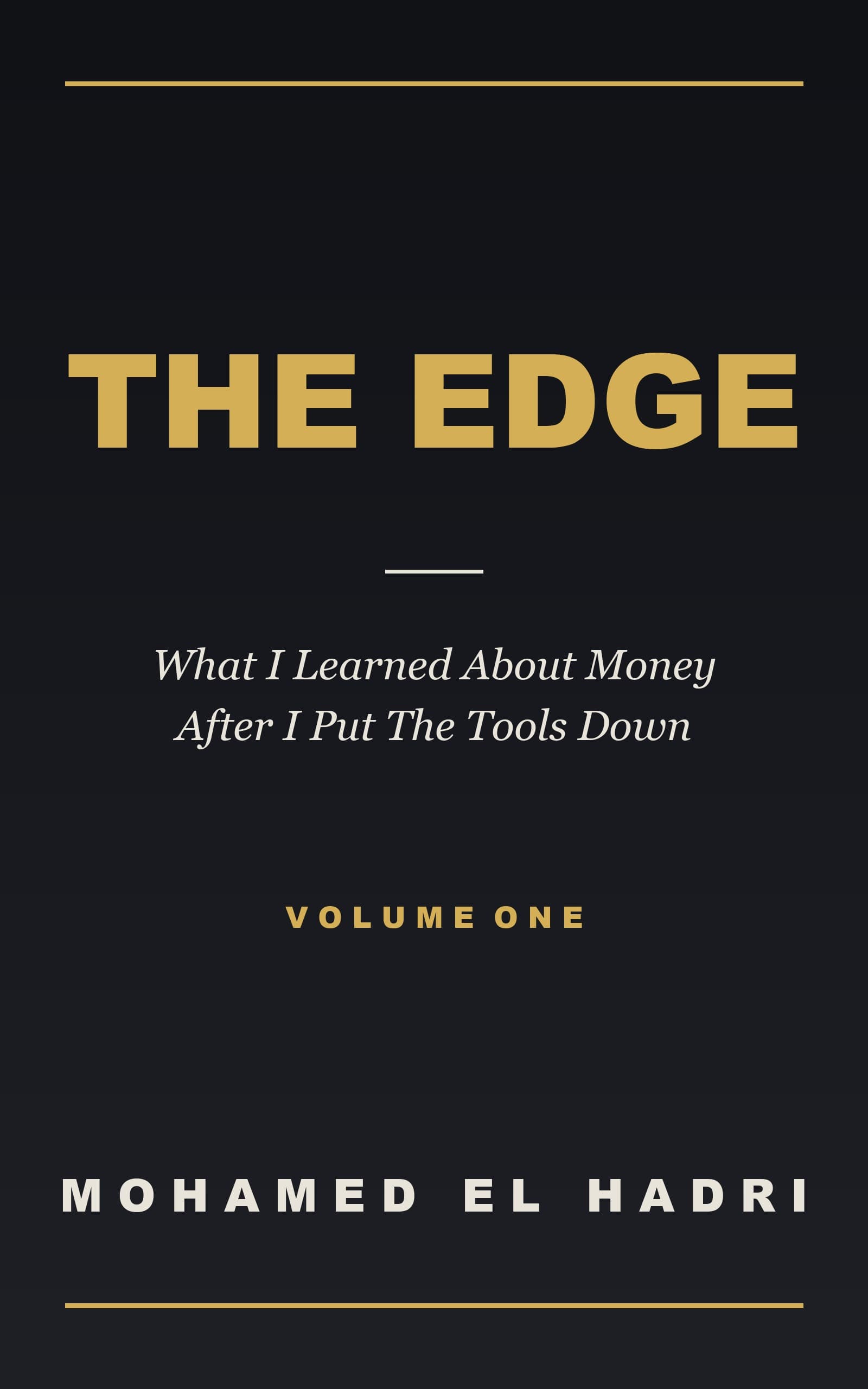
THE EDGE
What I Learned About Money After I Put The Tools Down · Mohamed El Hadri
Two firms do the same work, in the same town, at the same prices. Ten years later one owner sells up rich and the other is still chasing invoices on a Friday night. The gap between them is not effort and it is not luck. It is a list of things one of them knew.
24 chapters on how money actually moves through a contracting business, built to be listened to on the drive rather than read at a desk. Every chapter stands on its own and ends with something to do.
- The money machine - why fast growth eats cash
- The payment rulebook - who gets paid, and who waits
- Where the work is going - demand you can point at
- Winning without being the cheapest bid
- The operator - finding the bottleneck that is usually you
Written from a UK operation of more than eight thousand jobs. The money mechanics and the sales parts apply anywhere. Two parts cover British payment statute and UK government programmes specifically, so treat those as a model worth copying rather than as your own local rulebook.
Built for operators, not tourists.
You don't need to be a builder
Sales, organisation and judgement are the real skills. The trade knowledge is learnable; the trades are hireable.
You move fast and follow up
Most jobs are won by the first credible company to answer the phone. Reliability beats experience here.
You hold your nerve on price
The margin only exists if you can quote confidently and not discount out of fear. We teach exactly how.
You want an asset, not a hustle
Done right, this becomes a company that runs without your hands - and eventually without your daily presence.
Get the Construction Arbitrage playbook
One sharp email a week: real numbers, live deal breakdowns, and the systems that let you run jobs you never visit. No fluff, unsubscribe anytime.
Join operators learning to build construction businesses that run without them.
Straight answers
What is construction arbitrage?+
Construction arbitrage is the business model of running a construction company remotely: you win the client, a vetted subcontractor does the physical work, and you keep the margin between the price the client pays and the cost of delivery. You provide sales, co-ordination and a single point of accountability - not the labour itself.
Do I need construction experience to start?+
No. The skills that make this work are sales, pricing, organisation and judgement of people - not trade skills. Some of the best operators have never held a tool. The construction knowledge is learnable and the trades are hireable; what you bring is the business operating system.
How much money can you make with construction arbitrage?+
Margins typically run 20-35% on small and mid-sized works, compressing in percentage but growing in cash on larger projects. A focused beginner often reaches $2,000-$8,000 a month in gross margin within 6-12 months. Anyone promising $20k/month in 90 days is selling a course, not reporting data.
Is construction arbitrage legal and ethical?+
Yes. It is the default structure of the entire construction industry - every main contractor subcontracts trades and keeps a margin. It is ethical as long as you genuinely provide value: finding the work, carrying the risk, guaranteeing the result and managing delivery. The model is legitimate; the get-rich-quick marketing around it is what gives it a bad name.
Want the long version? Read the complete guide to construction arbitrage →