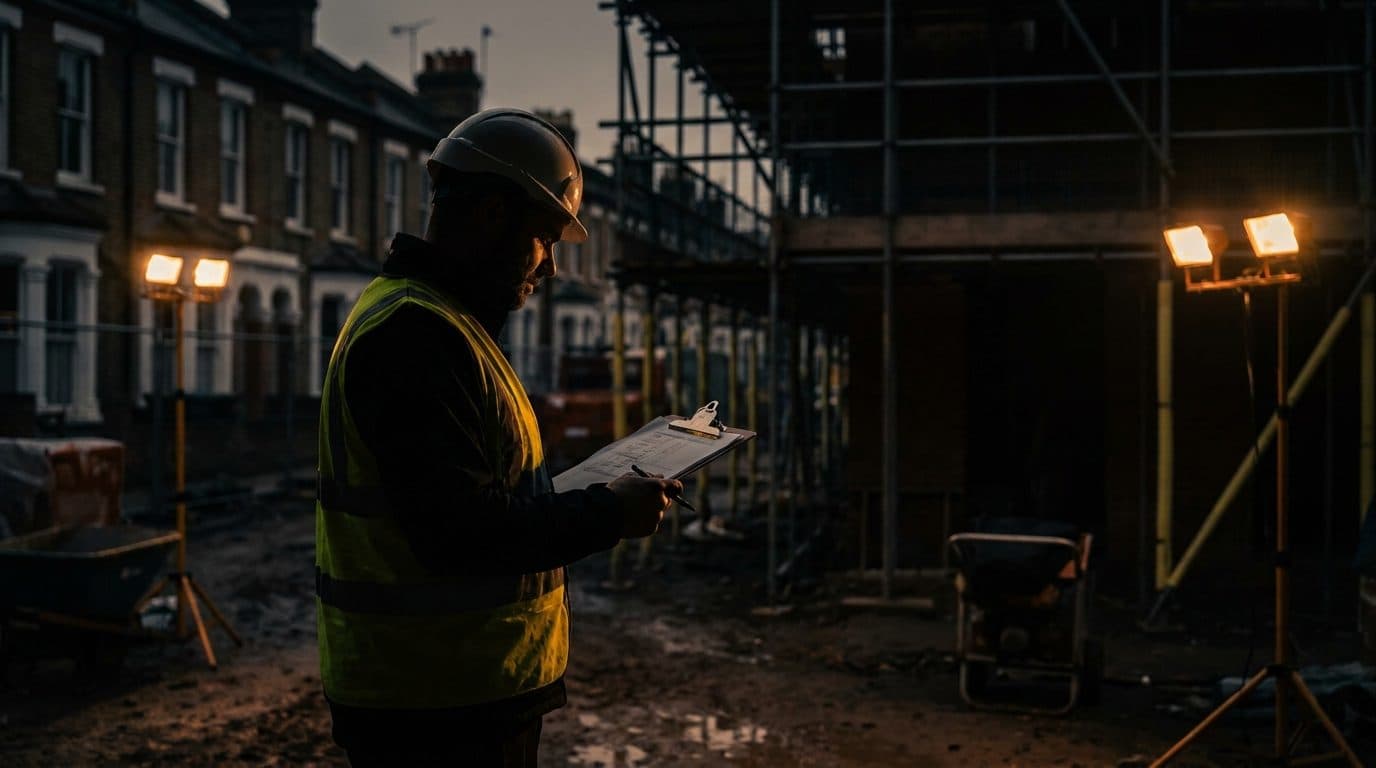
Construction arbitrage is not a new business model. The mechanics - win the work as the main contractor, sub it to specialists, keep the spread - have been the foundation of the construction industry for over 150 years. The term is recent. What it describes is not.
Where construction arbitrage actually comes from
The model traces directly to the late 19th century and the birth of the modern general contractor.
George A. Fuller moved to Chicago in 1882 and set up the George A. Fuller Company. His insight was simple: take primary responsibility for an entire building project - assume the liability, manage the timeline, co-ordinate the trades - and subcontract the specialist work to the people who could actually do it. His firm did not do the trade work itself. It managed the contractors who did.
Fuller's company built some of the earliest American skyscrapers: the Rookery Building (1888), the Tacoma Building (1889), the Monadnock Building (1891). These were among the most complex construction projects in the world at the time. The operating model was: win the contract, sub the trades, keep the margin on the management.
That is construction arbitrage. Fuller just called it general contracting.
By 1888, the American Institute of Architects had published the first standardised owner-contractor agreement in the US - the Uniform Contract - formalising the structure in law and in writing for the first time. The relationship between a main contractor, subcontractors, and a client had a legal framework. The industry crystallised around it.
The spread has always been the business
In finance, arbitrage means exploiting the price gap between two markets. You buy in one where the price is lower, sell in the other where it is higher, and keep the difference. The word traces to a French financial treatise from 1704 by Mathieu de la Porte, who used it to describe profiting from exchange rate differences between currency markets.
Apply that same logic to construction: the client pays the market rate for a finished project. Your subcontractors charge their trade rate to deliver it. The gap between those two numbers is your income. You are not making money by doing the work - you are making money by owning the spread.
That spread is not accidental and it is not exploitation. It is the market's payment for the role you play: winning the client, carrying the liability, co-ordinating the delivery, and making the whole thing land. Main contractors have earned that spread for over 150 years.
How subcontracting became the dominant model
The general contractor/subcontractor split was not always the norm. In earlier eras, master craftsmen ran their own trades and hired apprentices directly. Specialist trades - plasterers, glaziers, roofers - largely operated as independent firms doing their own client acquisition and their own delivery.
The shift came with scale. As projects grew larger and more technically complex through the industrial era, someone had to co-ordinate multiple specialist firms, take overall accountability, and keep the job moving. The co-ordination layer became the most valuable role in the chain - and the most profitable.
NAHB data tracked by Construction Dive shows the long-run trend. In the 1970s and 1980s, subcontracting accounted for around 70% of total residential construction costs in the US. That rose to 75% in 1993, 77% in 2003, and peaked at 84% during the 2000s housing boom. The largest builders today - those completing 25 or more homes a year - subcontract 87% of their work.
The model people now call construction arbitrage is not a niche idea or a recent workaround. It is how the mainstream construction industry has operated for generations. The only thing that changed is who is allowed to enter it.
Why the model needed a new name
If the model is 150 years old, why did it need renaming?
Because the traditional route into the general contractor role ran through the trades. You spent years as a carpenter, a plumber, or a project manager. You built relationships. You got your licence. Eventually you started taking on whole jobs yourself and began subbing out the work you could not do. The model was hidden inside a career path that most people had no entry point for.
"Construction arbitrage" is the deliberate, system-first version of that same model - built from the beginning to sub everything out, keep overheads lean, and run it without being tied to one trade or one location. The new name made the structure visible to people who had never worked in construction and had no idea this entry point existed.
Once it had a name, it could be searched, taught, and entered without a 20-year trade career as the price of admission. That is what the term actually unlocked.
What has not changed
The model is the same. The compliance requirements are the same.
Contractor licensing laws, general liability insurance obligations, tax requirements, and contract law apply to construction arbitrage exactly as they apply to any general contractor. The name is different. The legal landscape is not.
If you want to understand what the model actually looks like on real jobs, construction arbitrage examples: real jobs, real numbers shows three jobs with the full cost breakdown and margin. For a direct look at whether this is a real business or just a concept, is construction arbitrage a real business model answers that with evidence from the wider industry.
For how the model works mechanically - what you do, what the subs do, and where the money comes from - the how construction arbitrage works post covers the step by step. And for how construction arbitrage compares to just being a traditional general contractor, construction arbitrage vs contracting lays out the differences clearly.
The full definition and structure is on the what is construction arbitrage page.
If you want to build this alongside people who are already running it, Construction Arbitrage Players on Skool is where practitioners share what is actually working.
I am writing THE FAMILY SECRET - How Construction Arbitrage Really Works - the full inside account of how I built this from a 30-van operation into a lean model with 1,500-plus subcontractors. Not out yet, but coming.
Frequently asked questions
Was construction arbitrage invented recently?+
The term is recent. The model it describes - winning the work, subcontracting the trades, keeping the spread - is over 150 years old. It is the same structure that built the first American skyscrapers in the 1880s.
Who invented construction arbitrage?+
No single person invented it. George A. Fuller formalized the modern general contractor model in Chicago in 1882 by assuming full project liability while subcontracting specialist trades. That is the same operating structure construction arbitrage describes today.
What does arbitrage mean in construction?+
Arbitrage means exploiting the price spread between two markets. In construction, the spread is the gap between what a client pays for finished work and what subcontractors charge to deliver it. You win the contract at market rate, sub it for less, and keep the difference.
Is construction arbitrage the same as being a general contractor?+
Yes, in terms of the model. The distinction is intent: a traditional general contractor often grew from a trade background and may self-perform some work. Construction arbitrage is built from the start to sub everything and run lean - no staff, no vans, no tools. The legal and compliance requirements are identical.
When did construction arbitrage become a known term?+
The term gained traction online in the early 2020s as entrepreneurs began sharing the model on social media and in communities. It reframed what general contractors had always done in language accessible to people without a trade background.

Mohamed El HadriCo-Founder
I'm a co-founder of several construction companies. I built a construction business from a 30-van operation into a lean model with 1,500+ subcontractors in the database - winning the work as the main contractor, subbing it out, and running it as a system from a laptop across multiple countries. I write this site from what actually works.
@mointhemarket · 30k followers on Instagram →Run the model with people who already do
Reading the method is step one. Inside Construction Arbitrage Players you connect with players from around the world who run construction arbitrage every day and make real money from it - share your deals, get answers, and get in the game. Founding-member access is open now.
For the operator life and the inside story, see Contractor Club.
THE EDGE - the listening book on how the money really moves through a contracting business - is out now. Listen free, or see what is inside.
The Family Secret - how construction arbitrage really works - is coming soon.
A construction business built this way is a sellable asset
Systems, subs and margin - that is exactly what buyers pay for. If you own a construction or trade business and the exit is on your mind, list it on ContractorExit, the marketplace for buying and selling trade businesses. The valuation is free, so you find out what it is worth before you decide anything.
Get the Construction Arbitrage playbook
One sharp email a week: real numbers, live deal breakdowns, and the systems that let you run jobs you never visit. No fluff, unsubscribe anytime.