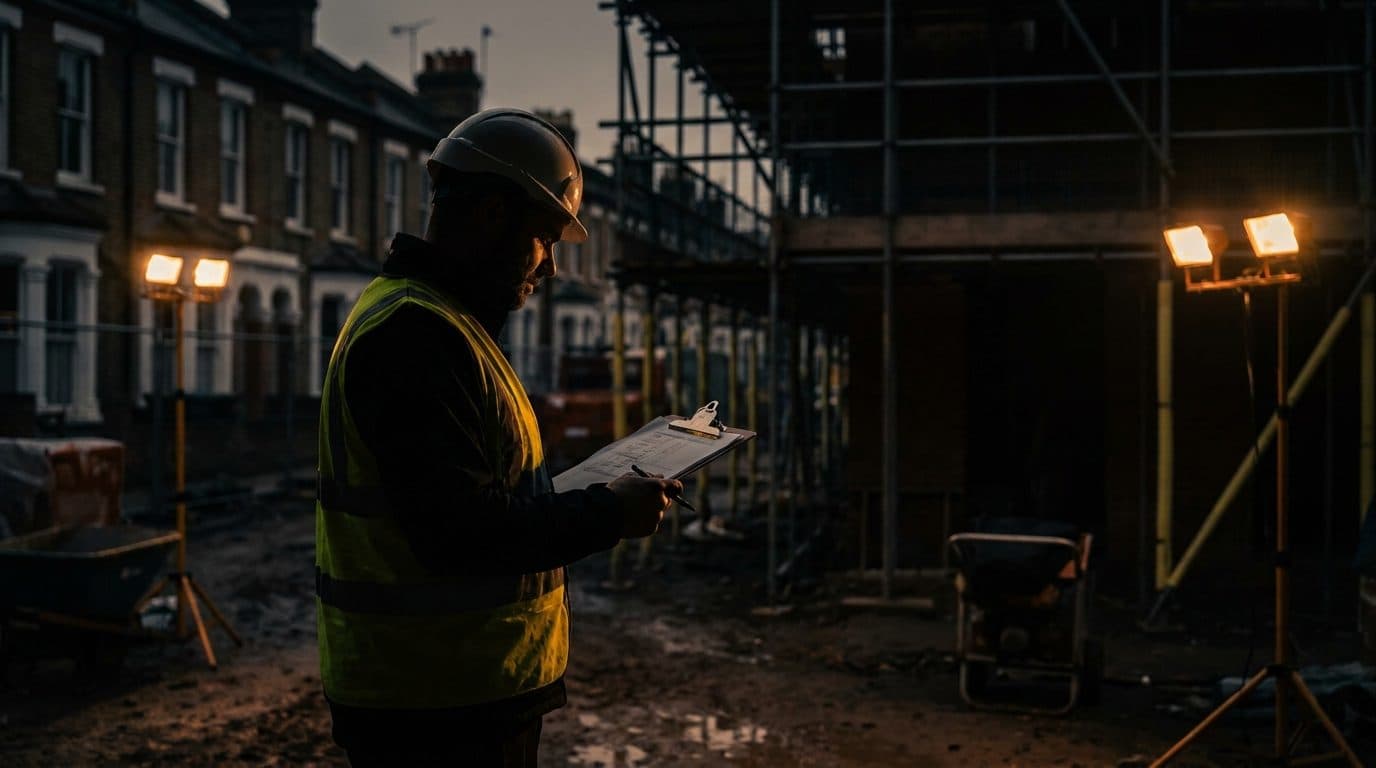
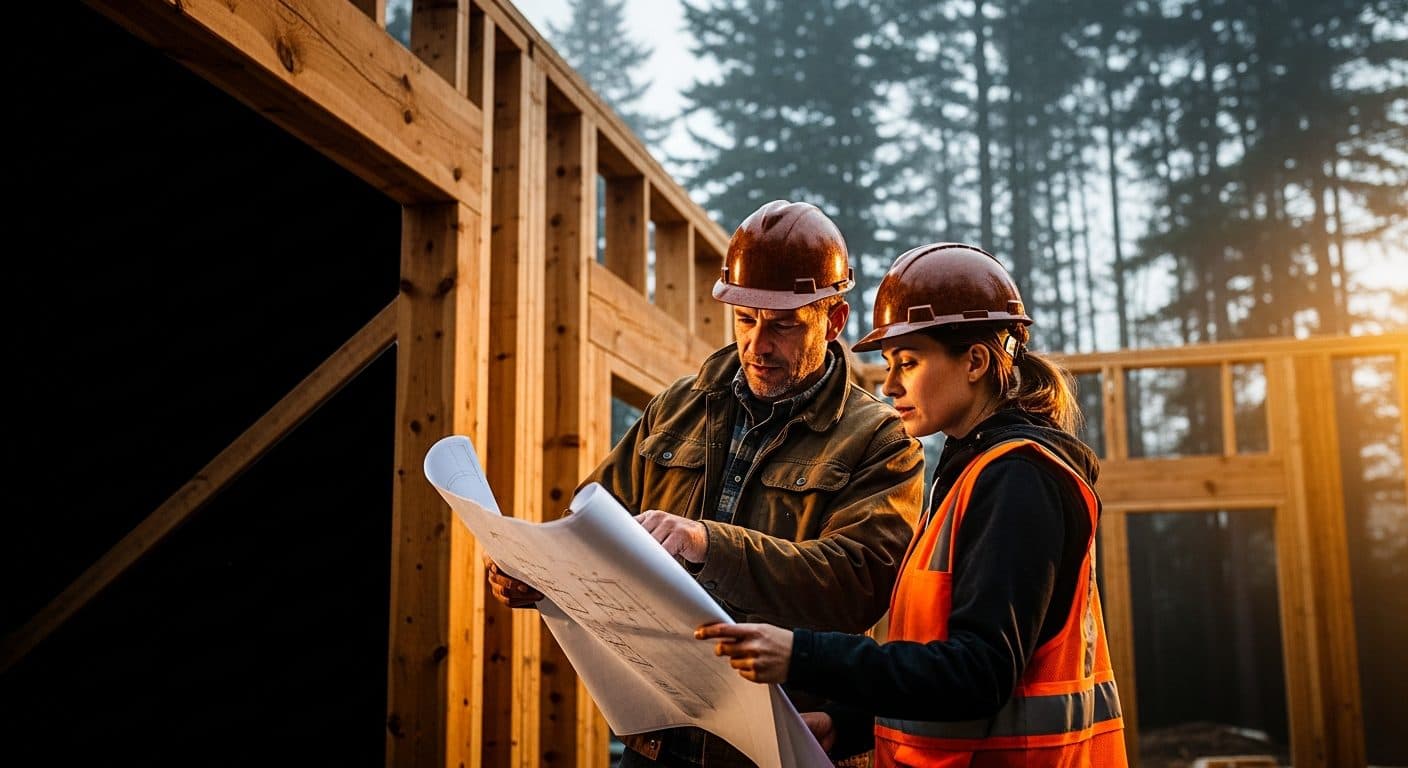
Yes. You can run a construction company without being a tradesman. The owner's job is to win work, hire the right specialists, manage delivery, and control the margin - not to pick up the tools. The compliance requirements vary by country and state, but none of them require you to be a tradesman.
I built a business with 1,500+ subcontractors in the database without ever being a tradesman. The model runs on business skills - not building skills.
How construction companies work when the owner is not a tradesman
Most people assume the owner of a construction company must be a builder. That assumption comes from the old model: the skilled tradesman who got good enough to start taking his own jobs, then grew a crew around himself.
That model exists. But it is not the only model, and it is not the one that scales.
The model that scales separates the business function from the technical function. The owner handles the client, the contract, the pricing, and the delivery management. The trades handle the physical work. The business makes money on the gap between what the client pays and what the work costs to deliver.
This is construction arbitrage: you operate as the main contractor, subcontract the work to specialists, and run the whole thing as a business system - not as a skilled labour operation. The trades need their skills. You need yours.
What the licensing reality looks like
This is where non-tradesmen get caught out - not by the model itself, but by what compliance is required to operate legally. It varies by country and state.
United States
There is no national contractor license in the US. Each state sets its own rules.
Around 33 states require a statewide general contractor license. Several require a qualifying individual - the person whose experience qualifies the business - to have verifiable construction experience, typically 3-4 years at journeyman level or above, within the last 10 years.
Here is the important distinction: the qualifying individual does not have to be the owner. In California, the Contractors State License Board (CSLB) allows a business to be qualified by a Responsible Managing Employee (RME) - a W-2 employee active in the business at least 32 hours per week. You can own the company and bring in an RME to hold the license while you run the business side.
States with no statewide GC license requirement include Texas, Colorado, and Kansas. In Texas, there is no state-level license for general building contractors at all. Local registration, permits, and bond requirements apply - Austin and Dallas require city registration; Houston operates on project-by-project permits. No state credential is required, which means the barrier for a non-tradesman to operate legally is lower from the start.
Confirm the rules with your specific state licensing board before you sign a client contract. The contractor license guide covers the full state-by-state breakdown.
United Kingdom
The UK has no general contractor license equivalent. There is no regulatory body that requires a construction company owner to hold a trade qualification. The compliance requirements are:
- Register the business as a sole trader or limited company.
- Hold public liability insurance - a commercial necessity even where it is not a strict legal requirement.
- Register for the Construction Industry Scheme (CIS) with HMRC before you pay your first subcontractor. As the contractor, you verify your subs through HMRC, make the required deductions from their payments, and file monthly CIS returns - including months where no payments were made (a requirement tightened from April 2026).
None of these require trade experience. A non-tradesman can operate as a UK construction contractor fully legally from day one, provided the compliance above is in place.
Australia
Licensing in Australia is state-by-state. Most states require a builder's license for residential work above certain value thresholds. Queensland's QBCC (Queensland Building and Construction Commission) requires a license for structural building work regardless of project value. Licensing criteria typically require relevant construction experience or qualifications, though the person qualifying the license does not have to be the business owner in every case.
Check the relevant authority for your state - QBCC in Queensland, the Building Commission in Victoria, Consumer and Business Services in South Australia - before operating.
The pattern across all markets
Non-tradesmen can legally run construction companies in all of these markets. The compliance requirement is not "you must be a tradesman." It is "you must have the right license, insurance, and tax registration in place." Those are achievable without ever having laid a brick.
What you actually need instead of trade skills
The skills that the business runs on are not the ones people expect.
Sales and follow-up. Every job starts as a lead. Speed and persistence close more work than construction knowledge. Respond to enquiries the same day and follow up until you get a clear yes or no.
Reading a scope and pricing it. You do not need to know how to do the work. You need to understand what is being asked, scope it clearly enough that a tradesman can price it, and build your margin on top of what the trade comes back at. This comes with practice. Start with small jobs.
Subcontractor sourcing and vetting. A good trade network makes the model work. A bad one is a liability. Vetting means checking previous work, confirming references, verifying insurance, and running a small trial job before you hand someone a significant project. The full process is in how to find subcontractors.
Project management from a distance. You are not on site. You are checking in daily, reviewing progress photos, keeping the client updated, and catching problems before they become expensive. Organisation and communication - not expertise.
None of these require a trade background. Anyone who can sell, manage people, and stay organised can build these skills inside their first year.
The construction arbitrage model - owning a construction company from a laptop
What I am describing - running a construction company without doing the physical work, making your income on the margin between what the client pays and what the subcontractor costs - is the construction arbitrage model by definition.
It is not a trick. General contractors have always worked this way. The large commercial builders sub out almost everything. You are doing the same thing at a smaller scale, as the business owner rather than the person on the tools.
The difference with construction arbitrage as a deliberate model is that you build it as a system from the start. Not a solo operator who eventually stopped getting his hands dirty - a business with the trade database, quoting process, client pipeline, and delivery management built in from the beginning.
If you want the step-by-step process for getting it running, the how to start a construction arbitrage business guide covers everything from business setup to your first signed job.
The risks to name upfront
Non-tradesmen can run construction companies. The risks are real and worth being straight about.
Mis-pricing. Quote before you have confirmed the subcontractor price and you eat the difference when the trade comes back higher. Confirm the sub price first - always. This single habit separates operators who make money from those who do it once and quit.
Unlicensed exposure. Operating without the correct license in states that require one carries civil and criminal penalties. An unlicensed contractor typically cannot use the courts to recover payment from a non-paying client. Sort your licensing before you sign your first contract.
Sub reliability. Your first trade network will not be perfect. Some will let you down. That is not failure - that is how you build a database of who to call and who never to call again. The risk is giving someone a large job before you have confirmed their reliability on a small one.
Client expectations. You are the project manager and the person responsible for delivery, not the builder. Own that position from the first conversation.
The model is simple. The compliance is where the detail sits. Get the detail right before you take your first job, and everything after that is just running the business.
Last checked: 20 June 2026.
Frequently asked questions
Do you need to be a qualified tradesman to own a construction company?+
No. Owning and running a construction company does not require trade qualifications. You need to be compliant - licensed where required, properly insured, and registered for the right tax schemes - but the owner is the business operator, not the person doing the physical work. The trades you hire carry the technical skills.
Can a non-tradesman get a general contractor license?+
In most US states that require one, you need a qualifying individual with verifiable experience - but that person does not have to be you as the owner. In California, for example, you can bring in a Responsible Managing Employee (RME) to hold the license while you run the business side. In states like Texas there is no statewide GC license at all.
What do you actually need to run a construction company without trade skills?+
Sales ability, the discipline to vet and manage subcontractors, the ability to price a job from a scope of work, and basic project management. None of these require a trade background. The compliance side - licensing, insurance, tax registration - is the part most people underestimate.
Is construction arbitrage the same as running a construction company without doing the work?+
It is the formalised, system-driven version of it. Construction arbitrage means you act as the main contractor, win the work, subcontract it to specialists, and make the margin on the spread - all without being on the tools. That is exactly the model described here.
What is the biggest risk for a non-tradesman running a construction company?+
Mis-pricing and unlicensed exposure. Quoting without confirming trade prices first is how owners lose money on early jobs. Operating without the correct license in states that require one carries civil and criminal penalties. Sort both before you sign your first contract.

Rob LazFounder
I'm a founder of several construction companies and of Contractor Club. I run a seven-figure construction business remotely - I haven't touched a tool in two years - and I teach others how to do the same.
@roblaz__ · 20k followers on Instagram →Run the model with people who already do
Reading the method is step one. Inside Construction Arbitrage Players you connect with players from around the world who run construction arbitrage every day and make real money from it - share your deals, get answers, and get in the game. Founding-member access is open now.
For the operator life and the inside story, see Contractor Club.
THE EDGE - the listening book on how the money really moves through a contracting business - is out now. Listen free, or see what is inside.
The Family Secret - how construction arbitrage really works - is coming soon.
A construction business built this way is a sellable asset
Systems, subs and margin - that is exactly what buyers pay for. If you own a construction or trade business and the exit is on your mind, list it on ContractorExit, the marketplace for buying and selling trade businesses. The valuation is free, so you find out what it is worth before you decide anything.
Get the Construction Arbitrage playbook
One sharp email a week: real numbers, live deal breakdowns, and the systems that let you run jobs you never visit. No fluff, unsubscribe anytime.