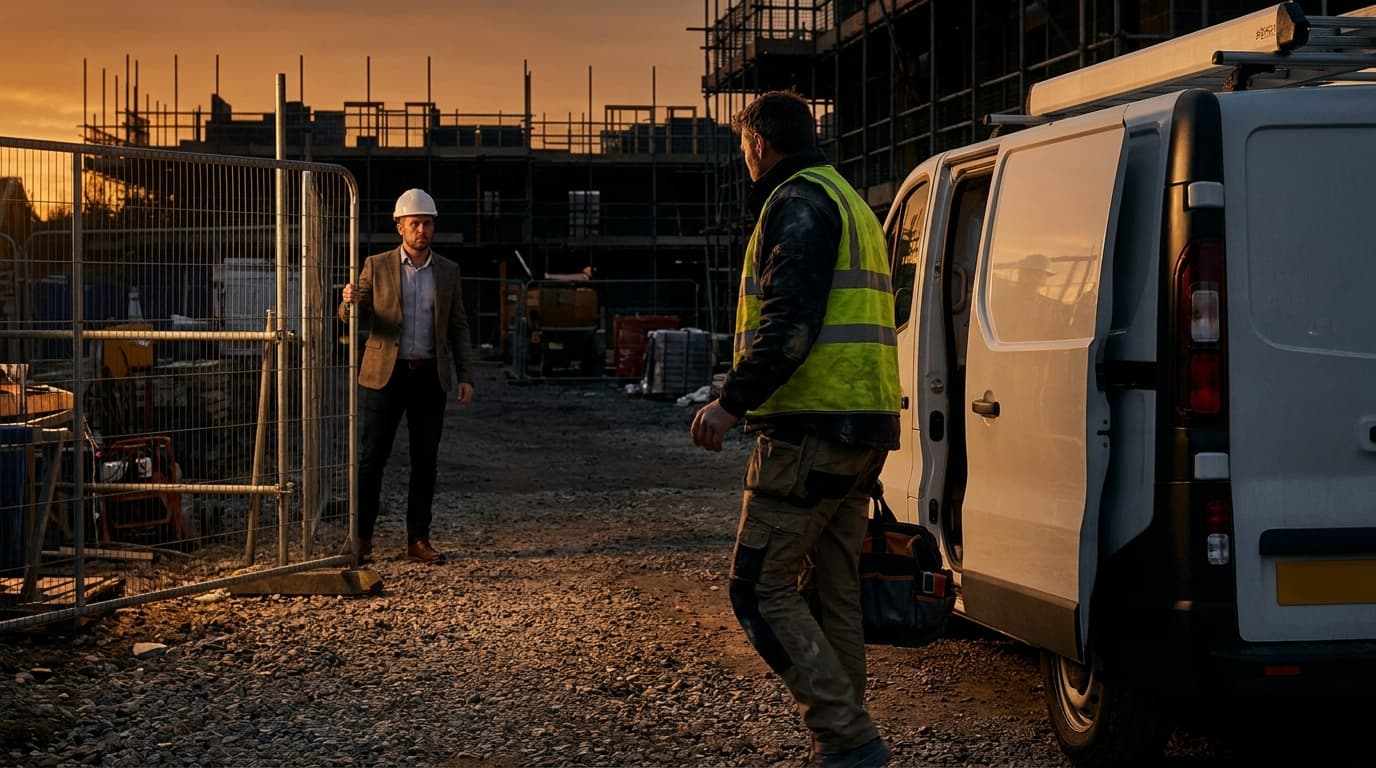
The main places contractors look for subcontractors are BuildingConnected, ConstructConnect, The Blue Book Network and the Procore Construction Network for commercial work in the US; Constructionline in the UK; and local referrals, builders' merchant counters and trade Facebook groups everywhere. No platform does the vetting for you - they give you names, and you do the rest.
I have over 1,500 subcontractors in my database now. Very few came from a directory. That is not an argument against using one - it is an argument for knowing what each source is actually good for before you spend time or money on it.
How to find subcontractors online: the US commercial platforms
These platforms are mostly built so that subcontractors can be FOUND by general contractors, not so that GCs can go hunting for subs. The mechanics matter because they change how you use them.
BuildingConnected is owned by Autodesk and has over one million construction professionals on it. Subcontractors create free profiles listing their trade, location and project history. General contractors search the network, send bid packages and manage responses through the same platform. If you are a GC looking for subs, you search by trade and radius, invite them to bid on your project and track who responds. The sub-side registration is free; the GC tooling is where the paid features live. It is the most widely used commercial platform in the US right now. The honest catch: any trade can create a free profile. The platform has scale but not pre-qualification.
ConstructConnect claims 750,000+ active commercial construction professionals. For GCs, the bid centre lets you send invitations and track responses. Paid plans unlock broader project discovery and outreach features. The sub-to-GC flow works similarly to BuildingConnected - you search, you invite, they price. ConstructConnect also has project intelligence tools (from $129/month) that help you find projects before they go public, but that is a different use case from finding subs.
The Blue Book Network has been running since 1913, when it started as a printed reference directory. It now lists over one million businesses across 560+ trade categories in every US region. For a GC wanting to pull names, the search and filter tools are the main draw - find electricians in a 30-mile radius, see their work history, contact them directly. The listing side costs subs between $150 and $800 per month depending on the plan. A working trade paying to list is at least motivated to win new work, which is a reasonable signal. It is not a quality signal.
Procore Construction Network (network.procore.com) is a free public directory. Search by trade, location and specialty, see company profiles, and make contact. It is less curated than BuildingConnected and less commercial-focused than The Blue Book, but it costs nothing and covers a wide range of trades. A useful first pass when you are entering a new area and need names fast.
Constructionline (UK)
Constructionline is the closest thing the UK market has to a prequalification standard. Over 30,000 suppliers are registered. As a buyer - which is what you are once you hold the contract - you can search the database by work category, size, location and membership level.
What makes it different from a directory: Gold-level suppliers have had their health and safety evidence independently verified, not just self-declared. That takes a meaningful chunk of vetting off your plate for the initial filter. You still check insurance certificates and speak to references, but the baseline compliance picture is already there.
Access for buyers requires a Constructionline account. The platform also has a Marketplace function that lets you post sourcing requirements and receive responses from matched suppliers. For anyone running regular commercial jobs in the UK, it is worth the friction to get set up as a buyer.
The consumer-facing platforms
These are built for homeowners, not for GCs. Treat them accordingly.
In the US: Angi (formerly Angie's List), HomeAdvisor and Thumbtack list working trades with reviews, photos and contact numbers. They are useful for finding names in a specific area, particularly for residential trades. The reviews are consumer reviews, not contractor-to-contractor assessments. Vet exactly as hard as you would a cold call.
In the UK: Checkatrade, MyBuilder and Rated People serve the same function. Names, locations, reviews. The trades on them range from excellent to terrible, and the platform itself does not distinguish between them beyond star ratings. Good for finding someone in a town where you have no existing contacts. Not a substitute for your own filter.
The warm sources (still the best)
No platform has beaten these in my experience:
Referrals from trades you already work with. A good plumber knows good plumbers. A reliable electrician knows which sparks show up on time. Ask every trade you work with who they would recommend for the disciplines you do not yet cover. This is the gold source because the person making the referral is putting their own reputation on it.
Builders' merchant counters. The trades at the counter at 7am are working trades. A relationship with the counter staff at your local merchants is worth more than most subscriptions. They see who buys what, who pays their account, who has been coming in for years. Ask which crews they see most often and which ones are professional with it.
AGC and ABC chapters (US). The Associated General Contractors and the Associated Builders and Contractors run local chapters with member directories of real firms. Meetings and events are where subs actively look for general contractors to work under. The quality threshold is higher than a public directory because membership carries dues and some level of accountability.
Trade Facebook groups and WhatsApp. Fast, free, and local. Every area has them. Post that you have steady work coming and watch who replies with photos of finished jobs and a day rate, not just a phone number. The serious ones distinguish themselves quickly.
The honest truth about using any of these
A directory is a starting list. What separates a useful sub from a liability is not which platform they are on - it is whether they show up, do the work properly and communicate when something goes wrong. None of these tools tell you that.
Once you have names from any source, the process is the same: check their insurance and any certifications required in your area, ask for examples of recent work, ideally speak to a past client, and give them a small paid trial before you trust them with a real client job. The platforms open the door. You are the filter.
For the full vetting process, read how to find good subcontractors and how to vet subcontractors before you give them a job. For the paperwork once you have chosen someone, the subcontractor hiring guide covers the contract, payment terms and tax paperwork in one place.
Building the actual model underneath this - winning the work, subbing it out and making the margin - is what construction arbitrage is about. The directory is just step one of getting the right trades underneath you.
Frequently asked questions
What is the best online subcontractor finder?+
For US commercial work, BuildingConnected (owned by Autodesk) and the Procore Construction Network are the most widely used. Both let you search by trade and region for free. The Blue Book Network and ConstructConnect add paid features. In the UK, Constructionline is the standard prequalification database with 30,000+ suppliers. None of these replace your own vetting - they give you names, not quality assurance.
Is there a free subcontractor finder?+
Yes. The Procore Construction Network at network.procore.com is a free public directory. BuildingConnected allows free GC accounts with access to its network of 1 million+ construction professionals. Constructionline in the UK gives buyers access to search its database. Trade Facebook groups and LinkedIn are also free and often faster than any platform for finding available trades locally.
How do I find subcontractors near me?+
Start with the trades you already work with and ask for referrals. For online searches, filter any platform by location - most US commercial platforms (BuildingConnected, Procore Network, ConstructConnect) let you search by trade and radius. Google Maps, used right, works too: search the trade plus the town, skip paid results, call the ones with recent reviews as a contractor offering steady work, not as a customer asking for a quote.
Are subcontractor directories reliable?+
They give you names. They do not give you quality. Any paid directory lets anyone list who can afford the subscription. Constructionline is the exception - Gold-level suppliers have had their health and safety evidence independently verified. For every other source, treat the directory as a starting list and apply your own vetting: check insurance, see work, speak to past clients, start with a small paid trial. The directory opens the door; you decide who walks through it.
Do good subcontractors list on directories?+
The busiest, most reliable trades often do not need to. They are already full of work from their own referral network. That does not mean directories are useless - they surface trades who are good and currently have capacity. But it does mean the first filter on any directory result is a phone call to understand why they have time to look for new work.
Mohamed El HadriCo-Founder
I'm a co-founder of several construction companies. I built a construction business from a 30-van operation into a lean model with 1,500+ subcontractors in the database - winning the work as the main contractor, subbing it out, and running it as a system from a laptop across multiple countries. I write this site from what actually works.
@mointhemarket · 30k followers on Instagram →Run the model with people who already do
Reading the method is step one. Inside Construction Arbitrage Players you connect with players from around the world who run construction arbitrage every day and make real money from it - share your deals, get answers, and get in the game. Founding-member access is open now.
For the operator life and the inside story, see Contractor Club.
THE EDGE - the listening book on how the money really moves through a contracting business - is out now. Listen free, or see what is inside.
The Family Secret - how construction arbitrage really works - is coming soon.
A construction business built this way is a sellable asset
Systems, subs and margin - that is exactly what buyers pay for. If you own a construction or trade business and the exit is on your mind, list it on ContractorExit, the marketplace for buying and selling trade businesses. The valuation is free, so you find out what it is worth before you decide anything.
Get the Construction Arbitrage playbook
One sharp email a week: real numbers, live deal breakdowns, and the systems that let you run jobs you never visit. No fluff, unsubscribe anytime.