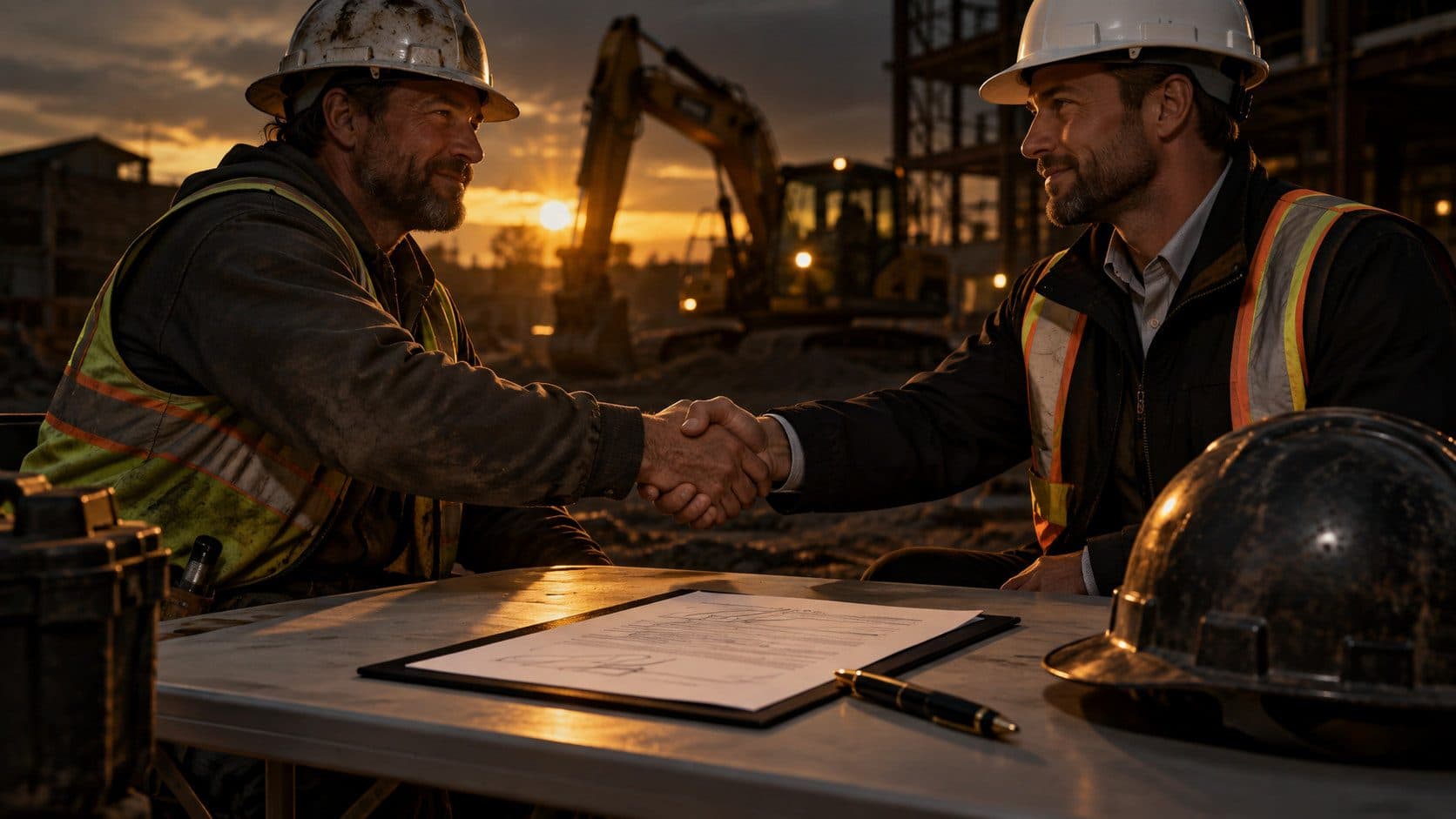
The reliable subcontractors are not sitting on directories hoping for calls. They are busy and they choose who they work for. Contractors looking for subs need to be in the right places - referrals, trade networks, a handful of platforms - AND be known as operators worth working for. Both sides matter, and this post covers both.
Why the best subs are not waiting to be found
The first thing to understand about the subcontractor market is that labour in construction is scarce in most markets. Skilled trades in the UK, the US, Canada and Australia are consistently in short supply. The ones who do good work, show up reliably and communicate well are typically booked out weeks ahead. They are not refreshing directory listings hoping a new main contractor calls.
This has a direct consequence for contractors looking for subs. If you are cold-calling names from a list, you are mostly reaching the subs who are available because nobody has kept them busy. The ones with a full order book and a reputation worth having are already committed to contractors they trust.
The way into that tier is not through a bigger list. It is through referrals, associations, and the reputation you build job by job.
Where to look: the real sources of good subcontractors
Referrals from your existing network. The single most reliable source of good subs is a recommendation from someone who has already worked with them. Start with the trades you have already used. Ask who they would recommend for the disciplines you need. Ask clients who have had work done by who and whether they would use them again. Ask builders' merchant staff - the reps at your local merchant have watched dozens of trades buy materials over years and they know who is consistent.
Every good sub knows other good subs. That referral chain is how most working sub networks are built, one name at a time.
Trade associations and professional bodies. In the UK, the Federation of Master Builders (FMB) has a directory of vetted member firms. Constructionline, maintained by Capita, holds a database of over 30,000 pre-qualified suppliers and subcontractors used by public-sector and commercial buyers across the country. For specialist trades, the NFRC (National Federation of Roofing Contractors) and similar bodies publish member lists.
In the US, the Associated General Contractors (AGC) and Associated Builders and Contractors (ABC) both run regional directories and networking events that put main contractors in front of specialist subs. State-level chapters are often more useful than the national level for finding local trades.
Commercial bidding platforms. For commercial and larger residential projects, BuildingConnected - now owned by Autodesk and used by over a million construction professionals in the US - lets you post bid invitations and search for subs by trade and location. The Procore Construction Network offers free access to a similar directory. In the US, ConstructConnect and PlanHub serve similar functions.
The limitation of any platform is the same one that applies to directories: they show you who is available and listed, not who is any good. Use them as a starting list and apply your own vetting from there. The how to find good subcontractors post covers that filtering process in detail.
LinkedIn and trade Facebook groups. LinkedIn is underused by most main contractors for sub sourcing, but it is effective. Searching the trade and location, looking at who is connected to people you already know, and reaching out with a specific job in mind produces results faster than most expect. Trade Facebook groups - most local markets have at least one - surface available trades quickly and often give you a community read on who is reliable before you even call.
How to become worth finding
Here is where most guidance on subcontractor sourcing misses the point. Finding subs is only half the equation. If you want the right subs - the ones who show up, price predictably and do clean work - you also need to be the kind of main contractor they actively want to work for.
The best trades get calls from multiple contractors. They choose based on three things: payment reliability, job quality, and the prospect of repeat work.
Payment on time, every time. This is the non-negotiable. Construction is the sector hit hardest by late payment globally - research consistently shows average payment delays well beyond agreed terms, often 30 to 60 days past the invoice date. Subs who have been burned by late payment will not take a second risk on an unknown contractor.
Pay on the date you agreed. Do it before they send a chaser. If your own payment cycle from the client is slow, that is a cash flow problem to solve at your end - through deposits, staged payments, or a credit facility - not a burden to pass down to the sub. The main contractor who pays on time without being chased is rare enough that trades remember it and tell other trades.
Clear scope before the job starts. Send the job brief in writing the day before: the site address, access details, who to ask for, what the job covers, and what it does not. A sub who shows up to a site that is not ready - previous trade not finished, materials not on-site, no clear contact on the day - has lost a day of billable time. They will not invoice you for it. They will note it and factor it into whether they pick up your next call.
Respect for their expertise. Subs know their trade better than you do. When they flag a problem with your specification or scope, take it seriously. The ones who point out issues before they start a job are the ones worth keeping. The ones who plough ahead and charge you for fixing it later are not.
Repeat work. Volume is the strongest signal you can send. A sub who knows another job is coming from you in three weeks will keep a slot open. One who cannot predict whether you will ever call again will fill that slot with someone they trust more. Signal the next job before the current one finishes - a single sentence is enough.
The referral flywheel
Every good sub you work with knows five more. This is the practical mechanism behind every large sub network.
When a trade does good work and you pay them on time, tell them you are growing your operation and ask who they would recommend for a trade they do not cover. Ask them who they know for a discipline you are struggling to source. A recommendation from a sub who already trusts you carries far more weight than any cold approach.
The network grows through the work itself. The vetted subcontractor network post covers how to systematise this - how to document, maintain and grow the roster as it builds. But the raw material that goes into it is always the same: one referral from someone who has already tested the sub themselves.
This is the real answer to contractors looking for subs. You do not build the network by searching harder. You build it by running the operation well enough that good trades want to be in it.
Where to go from here
If you are at the start, finding subcontractors covers the full sourcing picture - the online sources, the offline routes, and how to work through cold leads when your referral network is still thin. Once you have candidates, how to vet subcontractors walks through the four checks that separate a trusted trade from a gamble.
The wider model - winning the work and subbing it out - is what construction arbitrage means in practice. Getting the right subs into your network is the operational core of it.
Frequently asked questions
Why do good subcontractors ignore cold calls from new contractors?+
Because they are already full. The most reliable trades are oversubscribed and pick their clients based on payment history, job quality, and repeat volume. A cold call from an unknown contractor puts you at the back of the queue behind everyone they already trust. Referrals and reputation skip that queue.
What is the fastest way to get on a good subcontractor's radar?+
Get a referral from someone they already respect - a shared client, another trade they work alongside, or a builders' merchant rep who knows both of you. One warm introduction is worth fifty cold calls. If you do not have a shared contact yet, show up at a local trade association event and lead with what you offer, not what you need.
Do I need a company website for subcontractors to take me seriously?+
Yes. Main contractors with no web presence look new or informal. Subs do not always check before the first job, but before they commit to a steady relationship they will look you up. A basic site with a company name, the trades you use, the areas you cover, and a professional email address is the minimum. It costs almost nothing to set up and it removes a layer of doubt.
How do I get subcontractors to approach me, rather than the other way round?+
Pay on time without being chased. Send clear written briefs before jobs start. Treat their expertise with respect on site. Give repeat work to the ones who earn it. Trades talk to each other and word travels fast in every local market. A main contractor with a reputation for smooth jobs and prompt payment does not have to hunt for subs for long. The enquiries start coming in.
Which platforms do contractors use to find subcontractors?+
In the UK, Constructionline is the standard pre-qualification database; the Federation of Master Builders (FMB) directory is useful for residential trades. In the US, BuildingConnected (Autodesk) and the Procore Construction Network are the most widely used for commercial work. LinkedIn and trade-specific Facebook groups surface available trades quickly in most local markets. None of these replace a referral from someone whose judgement you trust.
Mohamed El HadriCo-Founder
I'm a co-founder of several construction companies. I built a construction business from a 30-van operation into a lean model with 1,500+ subcontractors in the database - winning the work as the main contractor, subbing it out, and running it as a system from a laptop across multiple countries. I write this site from what actually works.
@mointhemarket · 30k followers on Instagram →Run the model with people who already do
Reading the method is step one. Inside Construction Arbitrage Players you connect with players from around the world who run construction arbitrage every day and make real money from it - share your deals, get answers, and get in the game. Founding-member access is open now.
For the operator life and the inside story, see Contractor Club.
THE EDGE - the listening book on how the money really moves through a contracting business - is out now. Listen free, or see what is inside.
The Family Secret - how construction arbitrage really works - is coming soon.
A construction business built this way is a sellable asset
Systems, subs and margin - that is exactly what buyers pay for. If you own a construction or trade business and the exit is on your mind, list it on ContractorExit, the marketplace for buying and selling trade businesses. The valuation is free, so you find out what it is worth before you decide anything.
Get the Construction Arbitrage playbook
One sharp email a week: real numbers, live deal breakdowns, and the systems that let you run jobs you never visit. No fluff, unsubscribe anytime.