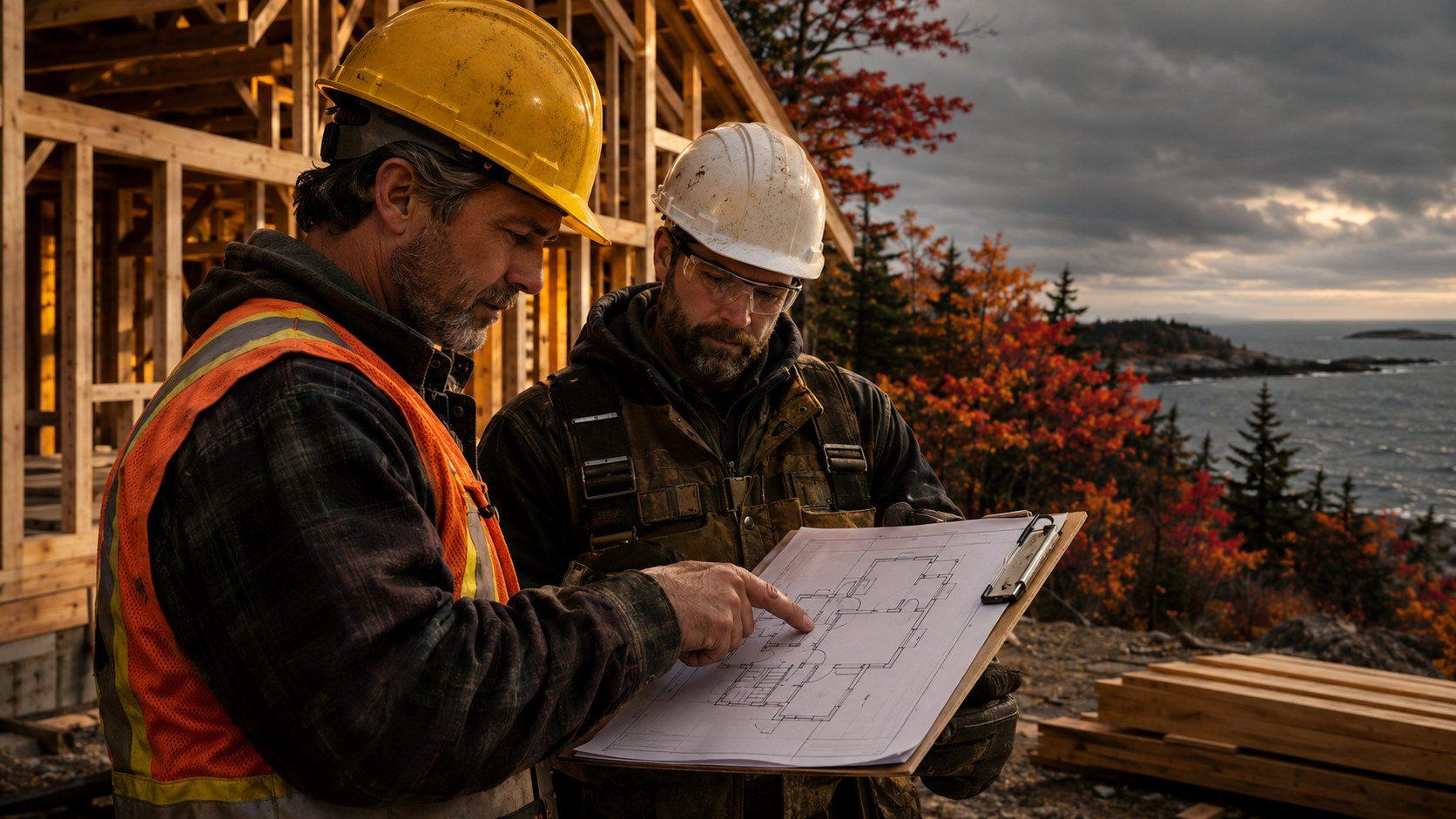
Yes. Construction arbitrage is legal in Quebec. You hold the prime contract, your licensed subcontractors do the physical work, you keep the spread. That structure is how most large commercial builds and multi-unit residential projects run in this province. The model is legal. The compliance load, though, is heavier in Quebec than in almost any other Canadian province - and the traps are different.
I work with operators running this model across Canada. Quebec is the province where people come unstuck the most, because it has two layers most provinces do not: an RBQ contractor licence with no dollar threshold, and Act R-20, which is a labour law that applies to all construction work and has no equivalent anywhere else in the country. Neither stops you from running the arbitrage model. Both have real teeth if you ignore them.
Here is what the compliance picture actually looks like before you take a contract in Quebec.
Is construction arbitrage legal in Quebec - what the law says
Construction arbitrage means winning the prime contract, subcontracting the physical labour to specialist trades, and keeping the margin between the two prices. Some call it contractor arbitrage or construction dropservicing - same model, different name. The legal position globally is that the structure is standard contracting practice. Quebec is no different on that point. What makes it different is the compliance architecture.
The Canada country-level overview covers the federal picture - no national GC licence, T5018 reporting, federal GST. This post goes one level deeper into Quebec specifically. If you are comparing provinces, the Ontario post and the British Columbia post show how those markets look. Quebec is the most demanding of the three.
The RBQ licence - the first thing to sort
The Régie du bâtiment du Québec (RBQ) issues contractor licences under the Building Act. The key rule: anyone who performs or has construction work performed for others must hold a valid RBQ licence. That includes you, the main contractor who subcontracts all physical work. The RBQ explicitly says a licence holder can operate without ever executing the work themselves - real estate developers who coordinate subcontractors are given as an example on the RBQ's own site. But you still need the licence.
There is no dollar threshold. Unlike states like Texas or New Jersey where licensing kicks in above a certain project value, the RBQ licence requirement applies to any construction work you have performed for others, regardless of contract size.
The licence categories. For a general contractor taking on building work, the relevant licence is an Annex I general contractor licence. There are 11 sub-categories (1.1.1, 1.1.2, 1.2, 1.3 and 1.4 through 1.10), each covering different building types and scopes. You apply for the sub-category or categories that match the work you intend to take on. If you are winning commercial renovation contracts, you need the sub-category that covers that building type. If you are doing residential work, a different sub-category applies. The RBQ's licence tool at rbq.gouv.qc.ca walks you through which sub-category fits your work type.
Qualification requirements. To qualify for the licence, you need to designate a qualified individual (the "représentant qualifié") who can demonstrate relevant experience in construction. The qualifying individual takes exams set by the RBQ. The business entity holds the licence; the qualifying individual holds the competency. Exam fees are $105 each. The RBQ assesses experience through CV, references, and sometimes an interview.
Fees for 2026. A new general contractor (Annex I) licence costs approximately $1,292 (droits $885 plus frais $407, indexed each January 1). Annual maintenance is approximately $990. These are not taxable. If you need to add a sub-category, the administrative fee is $105.
Subcontractors need their own licence. This is the part operators miss. Your RBQ licence does not cover the work your subs perform. Each subcontractor must independently hold a valid RBQ licence in the sub-category matching their scope of work. Electrical work requires an RBQ sub-category 16 licence. Plumbing and mechanical work requires sub-categories 15.x (master pipefitter classifications). If a sub does not hold the right licence, the work is unlicensed, and both the sub and you as the prime contractor face exposure. Verify every sub's RBQ licence at the RBQ's public registry before they start work.
Act R-20 and the CCQ - Quebec's unique construction labour law
This is the layer that has no equivalent in any other province. Act R-20 is the Act Respecting Labour Relations, Vocational Training and Workforce Management in the Construction Industry. It applies to all construction work on a construction site in Quebec. It is administered by the Commission de la construction du Québec (CCQ).
What Act R-20 does, in simple terms: it says that construction workers in Quebec must hold a CCQ competency certificate in their trade. Workers are assigned to one of the CCQ's sectors (residential, commercial, civil engineering and roads, or industrial) and must work within that sector unless the CCQ permits a crossover. Wage scales, working hours, benefits and training are all set at the industry level, not company by company.
For a construction arbitrage operator, the key question is: does Act R-20 apply to you as the main contractor, and does it apply to your subs' workers?
Your position as a GC. If you are operating purely as the coordinating contractor with no workers on site - no employees, no people you direct - Act R-20 does not impose workforce compliance obligations on you directly. The obligations sit with whoever employs the workers: your subcontractors. You are not employing construction workers; your subs are.
Your subs' position. Under Act R-20, an independent contractor is defined as a person or partnership holding a specialized contractor's licence under the Building Act (that is, an RBQ licence). A sub who holds their own RBQ licence and runs their own business is an independent contractor under the Act and is deemed to be an employer - responsible for their own CCQ obligations. Their workers must hold the right CCQ competency certificate for their trade. This is not your problem to solve, but it is your problem if you hire a sub who is not compliant and work stops on site.
The practical rule. When you vet a sub in Quebec, verify two things: their RBQ licence sub-category, and that their workers hold valid CCQ cards. The CCQ's registry is at ccq.org. A compliant sub running a legitimate construction business will have both.
Act R-20 modernisation. The CCQ has been updating Act R-20 through a multi-year modernisation program. As of 2026, one of the recent changes is that hours worked under Act R-20 now count toward experience calculations for CCQ competency levels. Keep an eye on the CCQ's modernisation pages for changes that may affect how subs structure their workforce.
CNESST workers' compensation
The Commission des normes, de l'équité, de la santé et de la sécurité du travail (CNESST) administers workers' compensation in Quebec. Construction is a mandatory industry.
For the arbitrage model, the key obligation is verifying sub coverage before work starts and before releasing payment. If a sub does not have CNESST coverage and a worker is injured on your site, CNESST may hold you as the principal contractor responsible for coverage costs. This is Quebec's equivalent of the statutory employer doctrine common in other provinces.
Request a CNESST certificate of compliance from each sub before they start work and again before you pay them. The CNESST online system allows instant verification. If a sub cannot produce a valid certificate, do not let them start.
Under the CNESST's status rules, independent contractors - those operating their own businesses with their own clients, tools, and control over their work - may have a different status than employees. But in construction, where Act R-20 defines the framework, the safer position is to treat every sub as an employer that needs its own CNESST account and coverage. Do not rely on a sub's claim that their workers are independent contractors to skip the certificate check.
QST and the tax picture
Quebec is the only province where contractors deal with both the federal Goods and Services Tax (GST) and the provincial Quebec Sales Tax (QST). The combined rate is 14.975%: GST at 5% plus QST at 9.975%. QST is calculated on the price excluding GST.
Construction services are taxable supplies for both GST and QST purposes. Register for GST and QST once your taxable revenue exceeds $30,000 in four consecutive quarters. That threshold is per tax - you register for both at the same trigger point, through the CRA (for GST) and Revenu Québec (for QST). Revenu Québec administers QST and handles combined registration.
For sub payments: file T5018 information slips with the CRA for each subcontractor paid more than $500 in a year where construction makes up more than 50% of your business income. This is a federal requirement that applies in Quebec as it does in every other province.
One thing to watch: input tax credits. Registered businesses can claim back GST and QST paid on business expenses (materials, tools, equipment) through input tax credits. Keep your invoices. The Quebec system requires that invoices from suppliers include their QST registration number for the credit to be valid.
Prompt payment - the 2024 regulation
Quebec enacted a prompt payment regulation under the Building Act that came into effect in 2024. The regulation sets mandatory timelines for payments flowing down the construction contract chain: from client to main contractor, and from main contractor to subcontractors. Main contractors must pay subcontractors within specific deadlines (generally 30 days from invoice), and disputes follow a mandatory rapid adjudication process.
For the arbitrage model, this matters in both directions. Your client must pay you on time, and you must pay your subs on time. The regulation has teeth - failure to comply triggers interest and can result in formal adjudication. If you are taking commercial contracts in Quebec, build the payment timelines into your cash flow plan from the start. Keeping a deposit and staged payment structure helps.
Business setup before your first Quebec contract
Before taking a contract in Quebec:
Register your business with the Registraire des entreprises du Québec (REQ). This is your provincial business registration, separate from federal incorporation. You need a Québec Enterprise Number (NEQ) before applying for an RBQ licence.
Apply for your RBQ licence. Build in time - the RBQ application process, qualification assessment, and exam scheduling can take several weeks. Apply before you start bidding, not after you win your first contract.
Register for GST and QST with Revenu Québec if you are approaching the $30,000 threshold, or register voluntarily from day one if you intend to claim input tax credits from the start.
Open a CNESST employer account if you have any workers of your own. Even if you operate with no direct employees, understand the system so you can verify sub coverage properly.
The honest picture for construction arbitrage in Quebec
The model is legal here - completely. What Quebec has that most provinces do not is a dense compliance architecture built around a mandatory provincial contractor licence (the RBQ) and a construction industry labour law (Act R-20) that applies to every site in the province. Neither of those stops you from running the arbitrage structure. What they do is raise the cost and the administration of getting it right.
The operators who get caught in Quebec are the ones who come from another province, assume the rules are the same, and skip the RBQ licence because there is no dollar threshold to trigger it. The licence is not optional. The other catch is not verifying sub RBQ sub-categories and CNESST standing before work starts. A sub without the right RBQ sub-category means unlicensed work under your prime contract. A sub without CNESST coverage means you carry the exposure.
Get the licence, verify every sub's RBQ sub-category and CNESST standing before they start, understand the QST picture, and use the prompt payment rules to your advantage on payment terms. That is how you run construction arbitrage in Quebec without walking into the traps.
Last checked: 21 November 2026.

Mohamed El HadriCo-Founder
I'm a co-founder of several construction companies. I built a construction business from a 30-van operation into a lean model with 1,500+ subcontractors in the database - winning the work as the main contractor, subbing it out, and running it as a system from a laptop across multiple countries. I write this site from what actually works.
@mointhemarket · 35.1k followers on Instagram →Run the model with people who already do
Reading the method is step one. Inside Construction Arbitrage Players you connect with players from around the world who run construction arbitrage every day and make real money from it - share your deals, get answers, and get in the game. Founding-member access is open now.
For the operator life and the inside story, see Contractor Club.
THE EDGE - the listening book on how the money really moves through a contracting business - is out now. Listen free, or see what is inside.
The Family Secret - how construction arbitrage really works - is coming soon.
A construction business built this way is a sellable asset
Systems, subs and margin - that is exactly what buyers pay for. If you own a construction or trade business and the exit is on your mind, list it on ContractorExit, the marketplace for buying and selling trade businesses. The valuation is free, so you find out what it is worth before you decide anything.
Get the Construction Arbitrage playbook
One sharp email a week: real numbers, live deal breakdowns, and the systems that let you run jobs you never visit. No fluff, unsubscribe anytime.