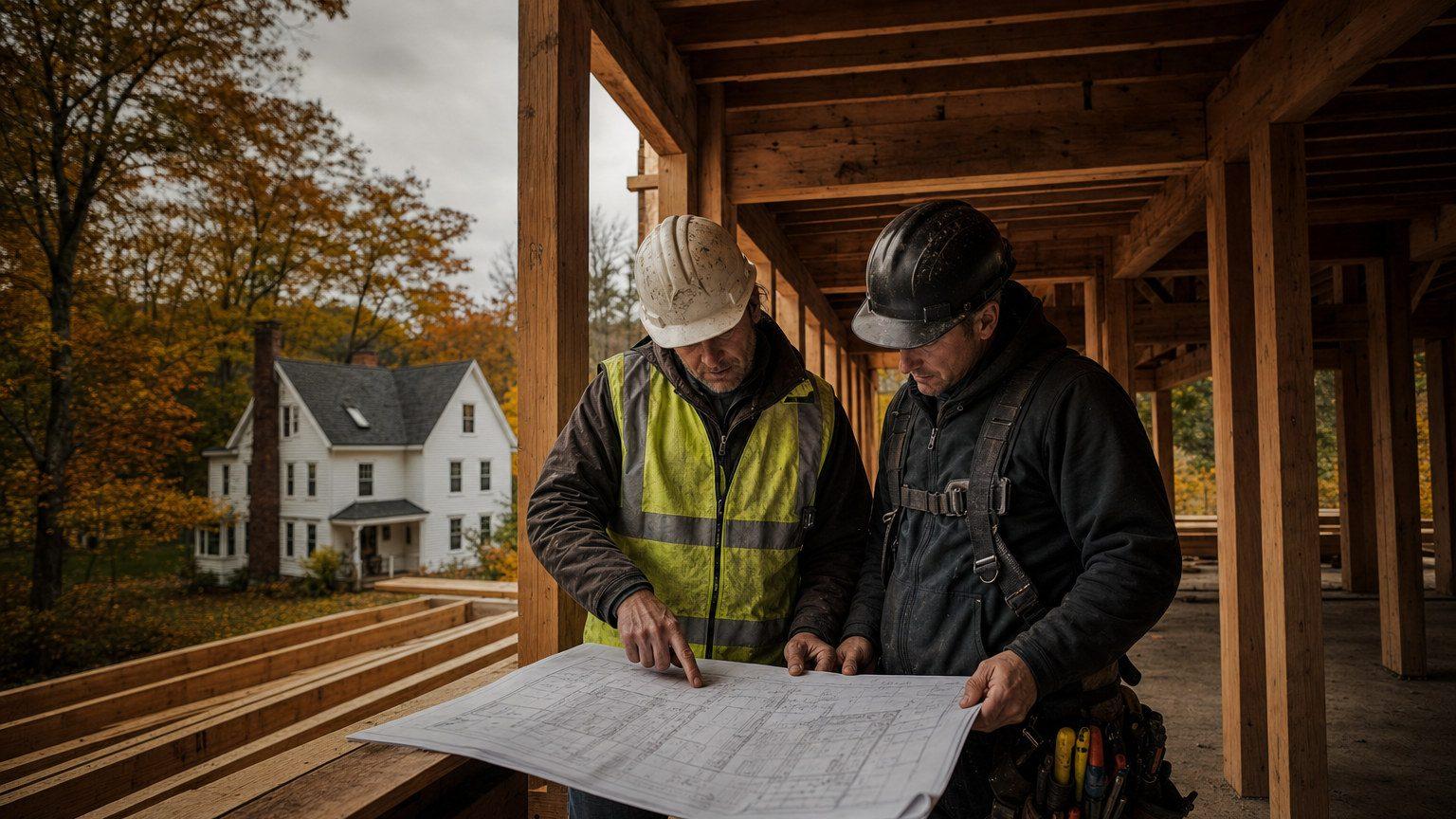
Yes. Construction arbitrage is legal in Maine. You hold the prime contract, your licensed subs do the physical work, you keep the margin. That is legal - and that is how most general contractors operate. What you need in Maine is a compliant written contract for residential jobs over $3,000, workers' compensation if you have employees, and your trade subs each holding their own independent state licences.
One thing that stands out about Maine: no state general contractor licence at all. The state tried to create one - LD 1226 passed both chambers in 2025 - and then killed it on adjournment on April 29, 2026 when the Legislature could not find the funding. As of today, Maine is one of the simplest states for the GC compliance side. The complexity is in getting your contracts right and knowing what your trade subs need.
Is construction arbitrage legal in Maine - what the law says
Construction arbitrage means you win the work, your licensed subs do it, and you keep the margin. Some people call it contractor arbitrage or construction dropservicing - it is the same model. The global legality picture covers why the structure is legal across the English-speaking world. It has worked this way in construction for decades.
Maine's specific picture: no statewide GC licence required, written contract obligations for residential work above $3,000 under the Home Construction Contracts Act, state-level trade licensing for electrical and plumbing through OPOR, and workers' compensation through Maine's private insurance market with a construction-specific employment presumption. The two main compliance risks are the written contract and ensuring your trade subs hold their own independent licences.
No state GC licence - what that actually means
Maine has no statewide general contractor licence. No exam. No registration requirement at state level for general building work.
That was confirmed definitively when LD 1226 - the Maine Home Contractor Licensing Act, which would have created licensing starting January 1, 2027 for residential projects over $15,000 - died on adjournment on April 29, 2026. The bill had passed both Maine legislative chambers in June 2025 but was placed on the Special Appropriations Table when the Legislature could not cover the $620,000 annual cost. The bill failed. The licensing regime it would have created does not exist. You can verify the bill's status directly on the Maine Legislature's website (legislature.maine.gov, search LD 1226, 132nd session).
What this means in practice: at the state level, there is no licence application, no exam, no surety bond requirement for general contracting. Building permits are handled by local authorities - town and city building departments. Some municipalities, including Portland, require proof of general liability insurance alongside a permit application, but those are local rules, not a state licence.
This does not mean you can operate without any compliance. It means the compliance is elsewhere: in your contracts, your insurance, your trade sub licences, and your workers' compensation.
The Home Construction Contracts Act - get your contracts right
This is the main legal requirement most Maine contractors get wrong, and it is the one that creates real exposure.
Maine's Home Construction Contracts Act (10 M.R.S. §§ 1486-1490) covers any contract for home construction or improvement work where the total value of materials or labour exceeds $3,000. For every such job, the contract must:
- Be in writing
- Be signed by both the contractor and the homeowner (or lessee) before work begins
- Include specific provisions as required by the statute
The homeowner also has three business days after signing to cancel the contract. The notice of this right must be included in the contract itself.
The civil penalty for failing to comply is up to $1,000, payable to the state. The Maine Attorney General enforces this Act and publishes guidance for consumers at maine.gov/ag. The AG's office is active on this - violations in Maine result in civil complaints and enforcement actions.
Work begins before the contract is signed? That is a violation. Missing required terms? That is a violation. The Act has had teeth in Maine courts - in Chibroski v. Landmarc Construction Services (Maine Superior Court, 2018), the court found a contractor in violation where work commenced before the contract was executed.
The practical rule: for any residential job in Maine over $3,000, have a written, signed, HCCA-compliant contract in hand before you book any subcontractors for that site.
This Act applies to residential home construction and improvement. Commercial contracts are governed by standard contract law, not this statute.
Electrical and plumbing - your subs need their own licences
Maine licenses electricians and plumbers at the state level through OPOR (the Office of Professional and Occupational Regulation under the Department of Professional and Financial Regulation, pfr.maine.gov).
Electrical. The Electricians' Examining Board issues three levels: Trainee/Helper, Journeyman, and Master. The board adopted the 2026 National Electrical Code. Exams are administered by PROV Inc. Verify any electrical sub's licence at maine.gov/pfr/professionallicensing/professions/electricians before they start. The board's online portal shows current licence status.
Plumbing. The Plumbers' Examining Board issues the same three levels: Trainee, Journeyman, and Master. As of January 1, 2024, all licence applications, renewals, and exam registrations go through the board's online system. Verify plumbing subs on OPOR's portal.
The rule that matters. Your work as the main contractor does not cover your subs' trade licensing. Each electrical sub and each plumbing sub must independently hold their own OPOR licence at the appropriate level for the work they are doing. This is the same rule as most other states. Verify before work starts, every job.
HVAC and fuel work. There is no statewide HVAC contractor licence in Maine for general heating and cooling work. HVAC work is covered through local building permits and, for oil burner and solid fuel work specifically, through the Maine Fuel Board's technician licences (journeyman and master levels for oil burner technicians and solid fuel technicians). If you are hiring HVAC subs, confirm what local permits are required in the specific municipality. For any oil burner or solid fuel work, your sub needs a Maine Fuel Board licence.
Workers' compensation - the construction presumption
Maine requires workers' compensation for any employer with at least one employee, under 39-A M.R.S. § 401. Maine is a private market state - there is no state monopoly fund. You buy WC from a private insurer.
The construction-specific piece is 39-A M.R.S. § 105-A. This statute creates a presumption of employment for anyone performing construction work on a construction site. Under § 105-A, a person doing construction work for a hiring agent is presumed to be that hiring agent's employee for WC purposes unless you can establish independent contractor status.
What does that mean for construction arbitrage? It means your subs are presumed to be your employees until proven otherwise. If a sub is properly set up - running their own business, their own tools, their own other clients, their own WC if they have employees - that presumption can be rebutted. If your subs are set up like employees on paper with just a different label, the presumption sticks, and you are on the hook for their WC.
The Maine Workers' Compensation Board offers a predetermination process for IC status. You can apply before a dispute arises and get a ruling on whether a particular sub relationship is genuine contractor status. That is worth using for any sub you work with regularly.
Sole proprietors and officers. Sole proprietors, partners, and corporate officers owning 20% or more can opt out of WC for themselves. If you are running a lean construction arbitrage operation as a sole proprietor with no direct employees, confirm your position with a Maine WC insurer. If you have no employees and are genuinely subcontracting everything to properly classified independent contractors, the WC obligation may be limited.
For anything beyond basic classification questions, speak to a Maine employment attorney. The construction presumption in § 105-A has practical consequences and the board audits this.
Running this in practice
Register your business with the Maine Secretary of State (maine.gov/sos) before you start taking contracts.
Get your residential contract template right. For every job over $3,000 on a residential property, use a written, signed HCCA-compliant contract before work begins. That means three-day cancellation notice included, all required terms present, signed by both sides. If you are not sure what the required terms are, the Maine Attorney General's consumer protection office publishes guidance at maine.gov/ag/consumer - they have a model contract form. Use it as a starting point.
Before any sub starts work: verify their OPOR licence status for electrical and plumbing subs. Verify their WC status if they have employees. Keep copies for your records. Those two verifications are the main sub-management discipline in Maine.
The construction arbitrage model works in Maine as well as any other state. No exam to get started, no state licence fee, local permits through each town's building department. What you are building a process around is the written contract obligation and the sub licensing verification. Get those two right and you are operating cleanly.
For building the sub network, how to find subcontractors and how to vet subcontractors cover the practical side. On the full insurance picture beyond workers' comp, what insurance you need for construction arbitrage covers GL, professional indemnity and what else a Maine operator should carry.
Last checked: 8 November 2026.
Frequently asked questions
Is construction arbitrage legal in Maine?+
Yes. Winning a construction contract, subcontracting the physical work to licensed tradespeople, and keeping the margin between what the client pays and what the subs cost is legal in Maine. That is standard general contracting practice. What you need is a written contract for any residential job over $3,000 (Maine's Home Construction Contracts Act), workers' compensation coverage for anyone you employ, and your electrical and plumbing subs each holding their own independent state licences through OPOR.
Does Maine require a general contractor licence?+
No. Maine has no statewide general contractor licence. LD 1226, the bill that would have created one starting January 2027, died on adjournment on April 29, 2026 when the Legislature could not fund it. As of that date, there is no state-level competency exam or registration requirement for general contractors in Maine. Building permits and any local contractor requirements are handled at the municipal level.
What is the Maine Home Construction Contracts Act?+
The Home Construction Contracts Act (10 M.R.S. §§ 1486-1490) requires any residential home construction contract over $3,000 to be in writing and signed by both the contractor and the homeowner before work begins. The contract must include specified terms. The homeowner has three business days to cancel after signing. Failing to provide a compliant written contract can result in a civil penalty of up to $1,000 payable to the state. The Maine Attorney General enforces this Act.
Do my electrical and plumbing subs need their own Maine licences?+
Yes. Electricians in Maine are licensed by the Electricians' Examining Board through OPOR (maine.gov/pfr/professionallicensing/professions/electricians). Plumbers are licensed by the Plumbers' Examining Board through OPOR. Each sub must independently hold their own state licence at the appropriate level - trainee, journeyman, or master. Your work as the main contractor does not cover them. Verify every trade sub's licence status on OPOR's online portal before they step on site.
How does Maine handle workers' compensation for construction subs?+
Maine requires workers' compensation for any employer with one or more employees (39-A M.R.S. § 401). Maine uses a private insurance market - there is no state monopoly fund. For construction work specifically, 39-A M.R.S. § 105-A creates a presumption of employment: anyone performing construction work on a site is presumed to be an employee of the hiring party unless you can establish independent contractor status under the statute's criteria. If subs are properly classified as independent contractors and have their own employees covered, you are not responsible for their employees' WC. The Workers' Compensation Board offers a predetermination process to confirm IC status before disputes arise.
Can sole proprietors opt out of workers' comp in Maine?+
Yes. Sole proprietors, partners, and corporate officers who own 20% or more of their company may opt out of workers' compensation coverage for themselves. The business still needs coverage for any employees it hires. If you are running a construction arbitrage operation as a sole proprietor with no direct employees - subcontracting everything - confirm your status with a Maine workers' comp insurer before assuming you need coverage.
Is construction arbitrage the same as construction dropservicing in Maine?+
Yes - same model, different name. Construction dropservicing, contractor arbitrage, and construction arbitrage all describe the same thing: you hold the prime contract, licensed subs do the physical work, you keep the spread. The Maine compliance requirements - compliant written contracts for residential work, OPOR trade sub licences, workers' comp - apply regardless of what you call it.

Mohamed El HadriCo-Founder
I'm a co-founder of several construction companies. I built a construction business from a 30-van operation into a lean model with 1,500+ subcontractors in the database - winning the work as the main contractor, subbing it out, and running it as a system from a laptop across multiple countries. I write this site from what actually works.
@mointhemarket · 35.1k followers on Instagram →Run the model with people who already do
Reading the method is step one. Inside Construction Arbitrage Players you connect with players from around the world who run construction arbitrage every day and make real money from it - share your deals, get answers, and get in the game. Founding-member access is open now.
For the operator life and the inside story, see Contractor Club.
THE EDGE - the listening book on how the money really moves through a contracting business - is out now. Listen free, or see what is inside.
The Family Secret - how construction arbitrage really works - is coming soon.
A construction business built this way is a sellable asset
Systems, subs and margin - that is exactly what buyers pay for. If you own a construction or trade business and the exit is on your mind, list it on ContractorExit, the marketplace for buying and selling trade businesses. The valuation is free, so you find out what it is worth before you decide anything.
Get the Construction Arbitrage playbook
One sharp email a week: real numbers, live deal breakdowns, and the systems that let you run jobs you never visit. No fluff, unsubscribe anytime.