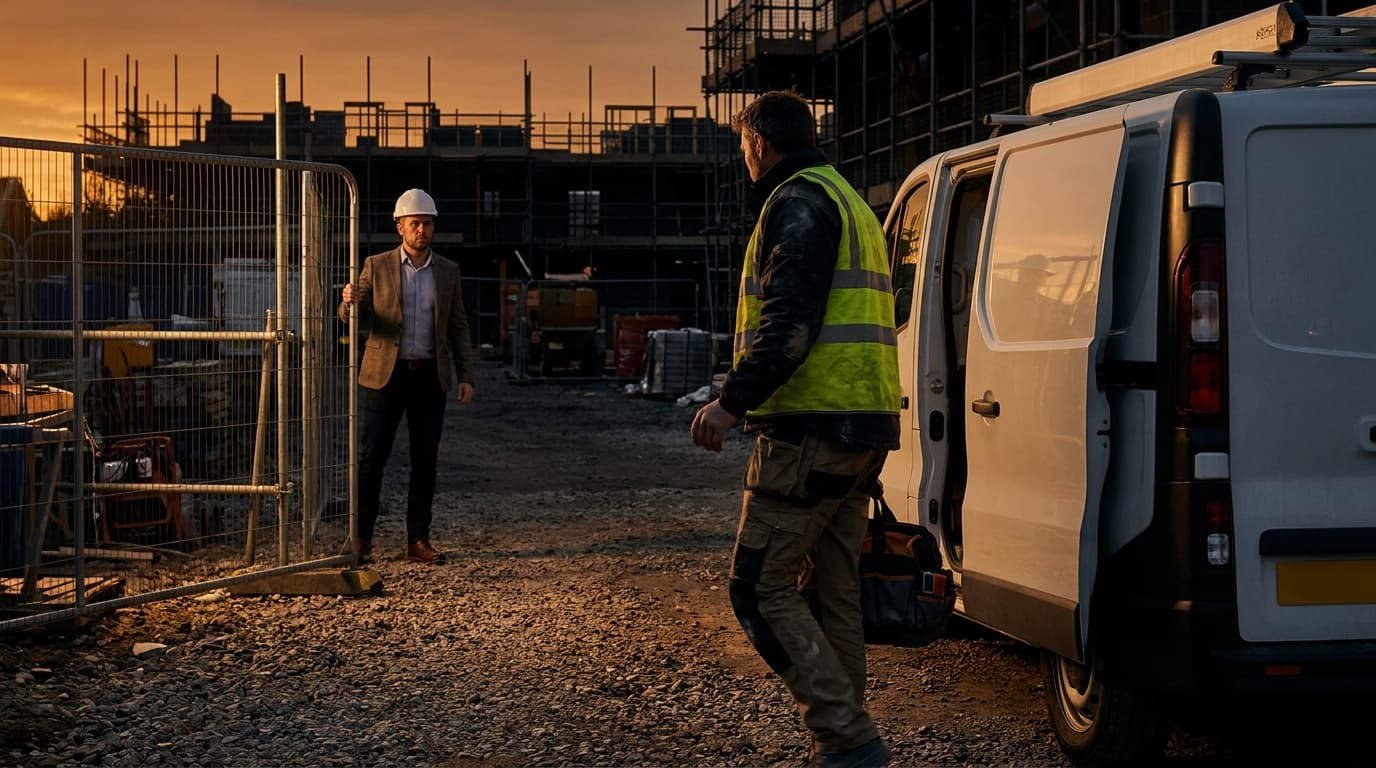
There is no fixed number. When I started, I had one person - a handyman who could do a bit of everything. By the time the model was running properly, I had over 1,500 subcontractors in my database. The real answer to how many subcontractors you need is: at least two vetted trades per discipline you quote regularly, starting from three core trades and growing as the work demands it.
How many subcontractors do you need when you're starting out
The minimum that lets you run without constant risk is two reliable trades per trade type for every discipline you quote regularly. Not one. Two.
One sub per discipline is a single point of failure. The day your only plumber is sick or double-booked, your job stops dead - and the client on the end of that contract does not care why. They blame you. You are the main contractor. You took the job.
I learned this the hard way early on. I had one plumber I rated. Then he had a family emergency mid-week with two plumbing jobs on. I spent most of that morning calling around trying to find cover while managing an anxious client. After that, finding a backup plumber was the first thing I did. He became one of my most reliable regulars.
In practice, if you are starting from scratch with a focus on residential maintenance and small commercial work, your opening bench looks something like this:
- Plumber - two to start, add a third once you're running consistent volume
- Electrician - two (always carry a backup on regulated trades)
- General builder / handyman - two to three, depending on job frequency
- Decorator - one to start, a second within 30 days if you're taking interior work
That is eight to ten people - a completely manageable number to vet and maintain a relationship with.
Build by trade lane, not by total headcount
The question most people ask wrong is "how many subs do I need total?" The right question is "how many do I need in each lane?"
Here is how a working bench breaks down across the trade types most common in property maintenance and light commercial construction:
- Plumbing: 2-3
- Electrical: 2 (minimum - never run one for a regulated trade)
- General build / maintenance: 2-4 (your highest-volume lane)
- Plastering and dry-lining: 1-2
- Tiling: 1-2
- Decorating / painting: 2-3 if you take interior fit-out or end-of-tenancy work
- Roofing: 1-2 if roofing features in your regular jobs
Across a broad trade mix that is roughly 12 to 20 people on an active bench. You are not using all of them every week. But you know you can call on them, and they know your name.
The minimum viable bench if you're just getting started
If this is your first month and your first few jobs, you do not need twenty subcontractors. You need three people you can stake your reputation on.
A plumber, an electrician, and a general builder cover the majority of the residential and light commercial work most people start with. Those three trades handle the highest-frequency call types: leaks, electrical faults, repairs, maintenance work.
The number is secondary. The quality is the whole game. Three subs who show up, do the work to standard, hold their own insurance, and communicate when something is wrong will serve you far better than fifteen names in a contacts list you have never properly vetted.
Vet them properly before you rely on them. The process - licence checks, insurance calls, references, trial jobs - is in how to vet subcontractors. Skip vetting and the bench is just a list.
When to add more subcontractors
You expand when one of these happens:
You are turning down work because you have no trade for it. If you are regularly declining jobs because you do not have a plasterer, a roofer, or a tiler you trust, that is a gap in the bench. Fill it.
A trade keeps letting you down and you have no backup. The second sub in a lane is almost always added after the first has let you down once. Better to add them before that moment.
You are moving into a new job type. Taking on commercial landlord contracts, insurance repair work, or school maintenance? Those jobs bring trade types you may not have covered yet - specialist drainage, suspended ceilings, fire doors. You need subs before you commit to the work, not after.
You are working across more geography. The trades who are reliable in your core area may not travel 40 miles for a job. Every new area you work in needs its own local bench. A sub network is partly geographic.
The rough rhythm I used: one vetted sub per trade to start, a second within 60 days, a third once the volume in that lane was enough to keep all three earning from me regularly.
Too few vs. too many - the problem most people miss
Too few subs is the obvious failure. No cover, no flexibility, constant stress.
Too many subs is the less obvious one. If you have thirty names in your database but you are only feeding work to six of them consistently, the other twenty-four stop picking up your calls. Good tradespeople work for the people who keep them busy. If they go three months without hearing from you, they have moved on.
The subs on your active bench - the people you call first - should all be getting work from you with reasonable frequency. Not every week necessarily, but often enough that they remember who you are and answer when you ring.
When the database had 1,500+ entries, the active bench - the trades I called first and who knew my name - was forty to fifty people. The rest were backup coverage for specialist jobs or areas I worked in less often. That ratio is roughly what makes sense: a tight, well-fed active bench and a deeper reserve list for less frequent needs.
Specialist trades: a different approach
Some trades come up occasionally but not regularly enough to keep warm the same way you would a plumber or a decorator.
Gas engineers, structural engineers, damp-proofing specialists, scaffolding companies - you need to know how to reach one, but you are not going to be feeding them two jobs a week. For these, one strong contact is usually enough to start. You find the second when the first is unavailable, which always happens sooner or later.
Do not build a deep bench of specialist trades you use twice a year. Build a deep bench of the trades that drive most of your revenue. Put the energy where the volume is.
How this fits into construction arbitrage
The whole model - construction arbitrage, or what some call contractor arbitrage or construction dropservicing - depends entirely on the quality of the subs you put on jobs. You win the work, you sub it out, you make the spread. That middle step is where the business either works or falls apart.
How many subcontractors you need is really a question about how much risk you are carrying. Every trade lane with only one sub is a job that can stop without warning. Every lane with two or three good subs is a job you can promise to deliver with confidence.
Start small. Vet carefully. Build the second sub into each lane before you need them. Then grow the bench only as fast as the work justifies it.
For the find side of this - where to actually locate good trades before you vet them - that is in how to find subcontractors. Once they are on the bench, running them when you're not on site is covered in managing subcontractors remotely.
This is exactly the kind of operational question THE FAMILY SECRET - How Construction Arbitrage Really Works covers in full - the numbers, the bench structure, the timing. Coming soon.
Frequently asked questions
How many subcontractors do I need to start construction arbitrage?+
Three is enough to get started - a plumber, an electrician, and a general builder. Those three trades cover the largest share of small-to-medium residential and light commercial work. Within 60 days of starting each trade, add a second for backup so a single no-show never stops a job.
Can I run construction arbitrage with just one subcontractor?+
Technically yes, but only until that one sub is sick, double-booked, or walks off. One subcontractor per discipline is a single point of failure. The day they are unavailable, your job stops and the client blames you. You always want at least two vetted trades for every lane you quote regularly.
How do I stop being dependent on one subcontractor?+
Actively source a backup before you need it. Ask your existing sub who else they would recommend in their trade - good trades know other good trades. Run the newcomer on a small trial job while the original is still on your bench. By the time the original lets you down (and they will eventually), you already have a vetted alternative.
What happens if all my subcontractors are busy when a job comes in?+
You turn down the job or delay it - which is why the bench matters. If you are regularly in the position of having more work than subs, that is a signal to expand your bench, not to pile pressure on the trades you have. Overloading your best trades is how you lose them.
Is it better to have more subcontractors or fewer, better ones?+
Fewer, better ones - up to the point where you have at least two reliable trades per discipline. After that, quality beats volume every time. Twenty unreliable subs are worth less than six consistently excellent ones who answer the phone and show up when they say.

Rob LazFounder
I'm a founder of several construction companies and of Contractor Club. I run a seven-figure construction business remotely - I haven't touched a tool in two years - and I teach others how to do the same.
@roblaz__ · 20k followers on Instagram →Run the model with people who already do
Reading the method is step one. Inside Construction Arbitrage Players you connect with players from around the world who run construction arbitrage every day and make real money from it - share your deals, get answers, and get in the game. Founding-member access is open now.
For the operator life and the inside story, see Contractor Club.
THE EDGE - the listening book on how the money really moves through a contracting business - is out now. Listen free, or see what is inside.
The Family Secret - how construction arbitrage really works - is coming soon.
A construction business built this way is a sellable asset
Systems, subs and margin - that is exactly what buyers pay for. If you own a construction or trade business and the exit is on your mind, list it on ContractorExit, the marketplace for buying and selling trade businesses. The valuation is free, so you find out what it is worth before you decide anything.
Get the Construction Arbitrage playbook
One sharp email a week: real numbers, live deal breakdowns, and the systems that let you run jobs you never visit. No fluff, unsubscribe anytime.