Reddit's answer to this question is surprisingly consistent once you find the real threads: yes, you can make money in construction without doing the physical work - the industry above a certain size already runs that way - but the money is made in estimating, pricing and management, and everyone who skips those parts becomes a cautionary comment. I run this model across UK maintenance contracts with 1,500+ subcontractors in the database. For the full method without the Reddit noise, the canonical guide is how to make money in construction without doing the work; this page is the thread evidence file - what Reddit says, and where it is right.
The thread that states the model outright
In r/sweatystartup, an operator wrote up "how to start a home service business in a trade you know nothing about, doing none of the work". His framing is the cleanest one-line version of construction arbitrage I have seen on Reddit: buy labour wholesale - subcontractors - and sell it retail. He started a painting business having never painted, and reported roughly $20,000 completed plus $75,000 quoted within a few months, in the slow season.
The thread's comments are the useful part, because they split exactly the way the real world does. The practical faction talks mechanics: cash flow, insurance certificates, sub vetting. The hostile faction predicts reputational collapse. Both are describing the same business - one from inside, one from outside.
What the practitioners say the job really is
The most durable advice sits in r/Construction's "words of wisdom for those looking to go into business for themselves" - 360 upvotes of hard-won operating truth. The core claim: the money is made in estimating, pricing and client psychology, not in swinging tools. The supporting details are the difference between a business and a hobby: allow around 7% material waste in pricing, learn that a 50% markup is only a 33% margin, pick a job-size sweet spot (too small has no profit in it, too big carries outsized risk), and pay a lawyer once for a contract that protects you.
An older r/sweatystartup thread asks the question even more directly - "were you able to bypass doing the work yourself from the start?" - and the answers are yes, provided you own the marketing, the scheduling and the customer relationship. Own the client and the calendar, and the work can be delivered by people who are better at it than you will ever be.
And for scale, the counterexample that shut down a thread built to collect failure stories: in r/Construction, "so all the entrepreneurs can take note" invited disasters about no-experience founders, and the top comment instead described a founder who admitted knowing nothing, immediately hired someone who knew everything, and built the company to $150M a year. Trade skill and ownership skill are different jobs. You can hire the first. You cannot hire the second.
The failure modes, taken seriously
The hostile comments in those threads are not wrong about the failure modes - they are wrong that the failure modes are the model. Each one is an operating problem with a known defence:
| Reddit's warning | Real? | The defence |
|---|---|---|
| You pay subs before the client pays you | Very - the #1 killer | Terms in the client contract, deposits, invoice factoring priced in; see the cash flow playbook |
| You cannot judge the quality of the work | Real for tourists | First subs come vetted or referred; photo evidence and sign-off gates; keep a tradesman's judgement on call until you develop your own |
| Subcontracting has licence rules in some places | Real, regional | In some US states subbing requires a licence equal or greater to the work; the UK requires CIS registration before your first sub payment - compliance first, always |
| Subs run change orders past an ignorant owner | Real | Fixed-price sub agreements against a written scope; the scope document is the skill |
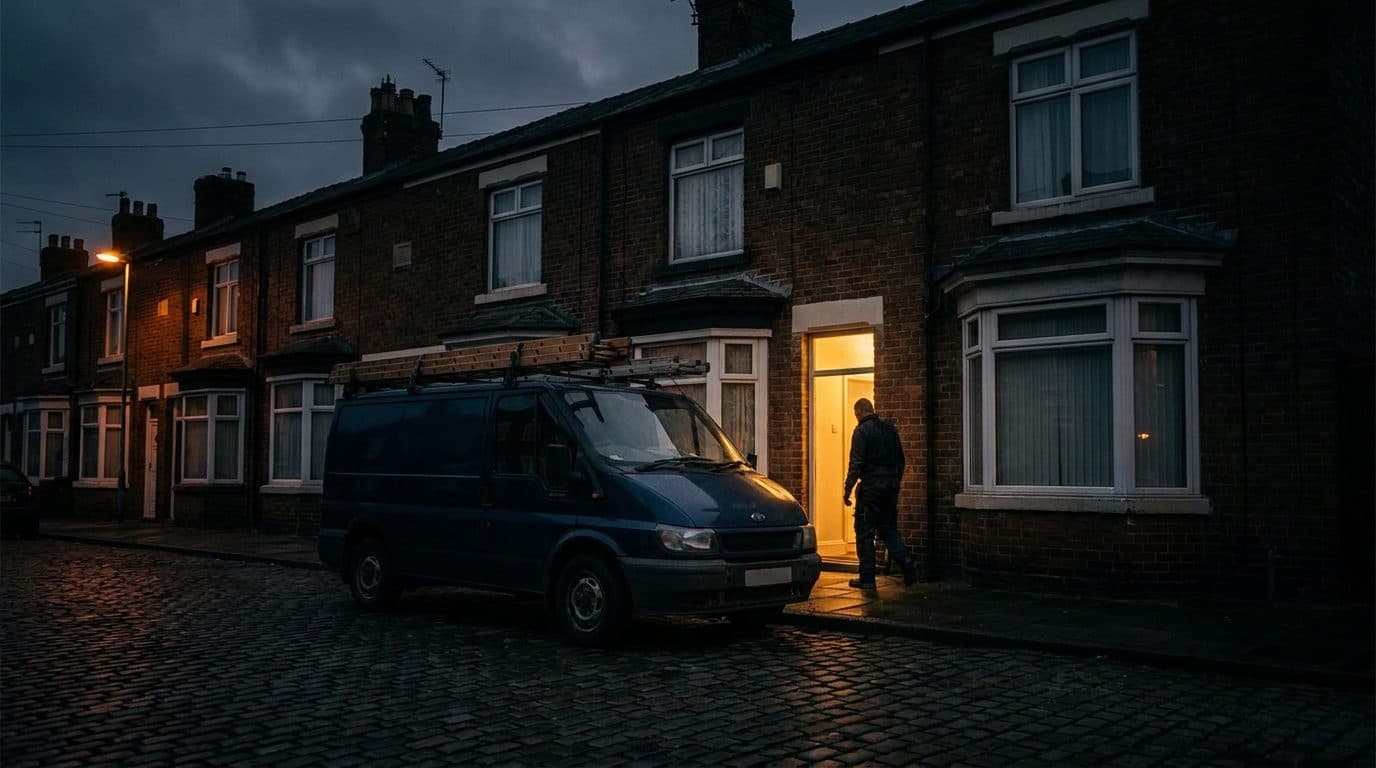
| A different crew's van confuses the homeowner | Cosmetic but real | Say so upfront; clients buy accountability, not your personal labour |
Where the margin actually sits
Numbers from the practitioner threads and my own operation line up. Residential GC markups of 20-40% are called standard in r/GeneralContractor's markup thread, with 10% mocked as a bankruptcy plan. On my maintenance contracts the honest range is roughly 20% gross running lean middleman-style and up to ~60% gross in full project-management mode, where we scope, manage and warranty everything - the full breakdown is in how much money can you make with construction arbitrage, and the Reddit-wide picture is in the construction arbitrage Reddit roundup.
The model rewards exactly two things: winning work at the right price, and managing delivery you do not personally perform. Both are learnable. Neither is passive.
This page summarises public Reddit discussions and our own operating experience. We are not affiliated with Reddit.
Frequently asked questions
Can you really make money in construction without doing the physical work?+
Yes - it is how most of the industry above a certain size already works. The owner wins the work, prices it, subcontracts delivery and manages the spread. Reddit's practitioner threads confirm it, including a founder with no construction background who grew a company to $150M a year by hiring the knowledge he lacked.
What does Reddit say the money actually is in construction?+
Estimating, pricing and sales - not tools. The most upvoted advice thread in r/Construction puts it plainly: the money is made in the estimate and the psychology of the client relationship. Guessed estimates are named as the thing that kills companies.
What is the 'buy labour wholesale, sell retail' model?+
An r/sweatystartup operator's framing of the same model this site calls construction arbitrage: subcontractors are wholesale labour, the client pays retail, the operator keeps the spread for winning, scoping and managing the job. His numbers: about $20k completed plus $75k quoted within months, in the slow season.
What are the failure modes Reddit warns about?+
Paying subs before the client pays you, insurance that does not name you correctly, states where subcontracting requires a licence, subs exploiting an owner who cannot judge the work, and vague scopes that turn change orders into margin leaks.
Do I need trade experience to start?+
No, but you need pricing and management skill from day one, and you must buy or borrow the technical judgement you lack - a retired tradesman on call, a trusted first sub, or a partner. The threads' hostility is aimed at people who bring neither skill set.

Mohamed El HadriCo-Founder
I'm a co-founder of several construction companies. I built a construction business from a 30-van operation into a lean model with 1,500+ subcontractors in the database - winning the work as the main contractor, subbing it out, and running it as a system from a laptop across multiple countries. I write this site from what actually works.
@mointhemarket · 30k followers on Instagram →Run the model with people who already do
Reading the method is step one. Inside Construction Arbitrage Players you connect with players from around the world who run construction arbitrage every day and make real money from it - share your deals, get answers, and get in the game. Founding-member access is open now.
For the operator life and the inside story, see Contractor Club.
THE EDGE - the listening book on how the money really moves through a contracting business - is out now. Listen free, or see what is inside.
The Family Secret - how construction arbitrage really works - is coming soon.
A construction business built this way is a sellable asset
Systems, subs and margin - that is exactly what buyers pay for. If you own a construction or trade business and the exit is on your mind, list it on ContractorExit, the marketplace for buying and selling trade businesses. The valuation is free, so you find out what it is worth before you decide anything.
Get the Construction Arbitrage playbook
One sharp email a week: real numbers, live deal breakdowns, and the systems that let you run jobs you never visit. No fluff, unsubscribe anytime.